



API Integration Cost: What You Pay to Build It and Keep It Running.
Most of an API integration's cost arrives after launch. How to price the build, the connector option and the years that follow.
API Integration Cost: What You Pay to Build It and Keep It Running.
Key Takeaways
- API integration cost has two parts: the build, which gets quoted, and the running cost, which usually does not.
- Of the four stages every integration goes through, transformation and error handling take the most hours and are the first things cut from an optimistic estimate.
- An off the shelf connector or a middleware platform is often the cheaper answer, and custom work earns its cost in a narrower set of cases than most buyers expect.
- The authentication method you choose changes the bill for years, because API keys that never expire turn one breach into a permanent one.
- An integration is a dependency on somebody else's release schedule, and budgeting for it as a one-off project is the most common way the cost goes wrong.
Most API integration cost arrives after the build. A quote prices the connection: the request, the handshake, the data mapping. It rarely prices the monitoring, the version changes on the other side and the credential renewals that start the week after launch.
This guide is for the person approving the work rather than the person writing it, so there is no code on the page. If you want the concept first, our post on what an API integration actually is covers the definition. If you are scoping a product with integrations built in, our web app development page covers how we approach one.
Where API Integration Cost Goes, Stage by Stage
Every integration, from a postcode lookup to a payment, moves through the same four stages. Each stage is a line in the API integration cost, and the lines are far from equal.
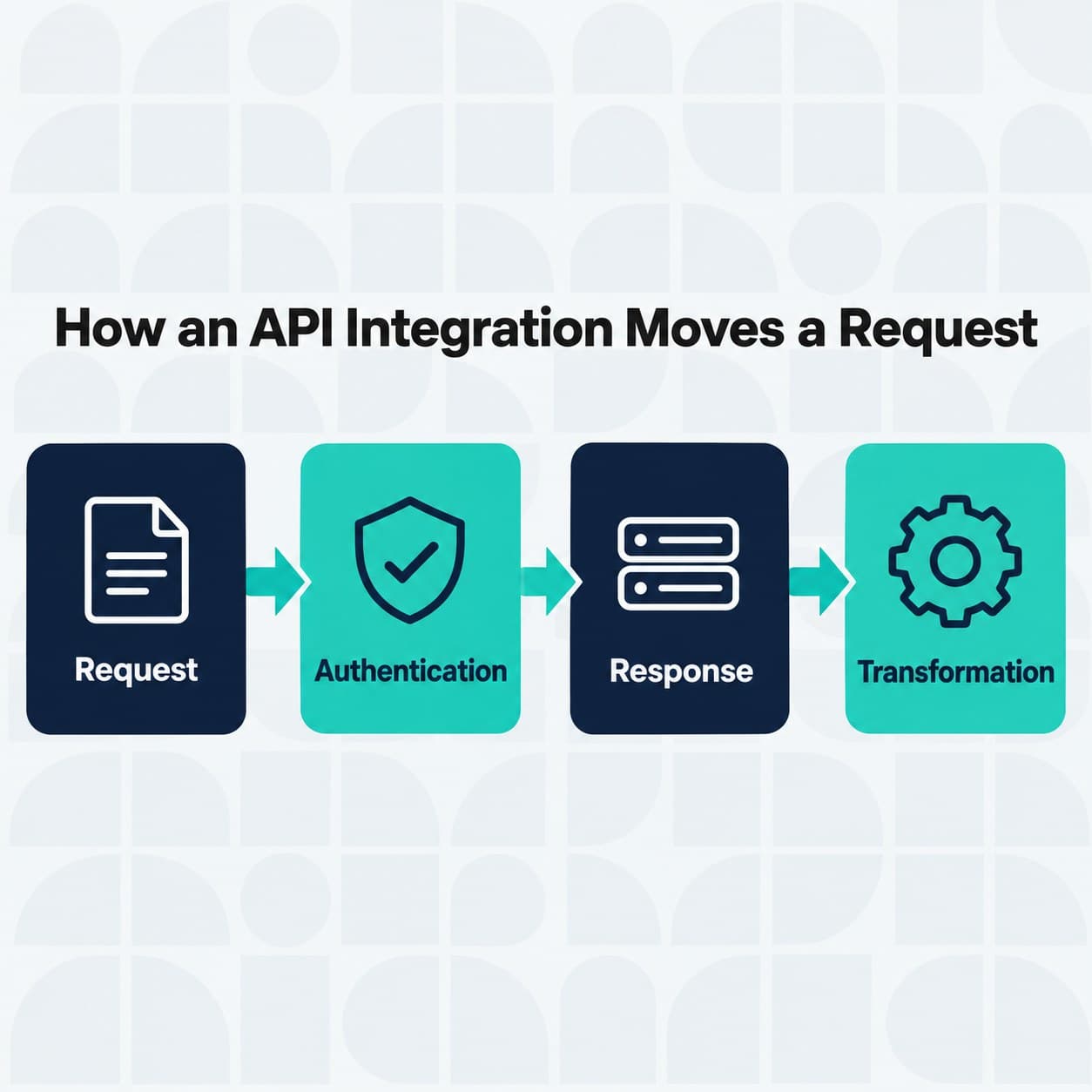
The four stages, in the order they always happen.
The request is the cheapest part. Your system asks a question in a fixed format at a fixed address, and a well documented partner API makes this close to routine.
Authentication comes next, and the cost depends on the method. A shared key is quick to set up. A token based scheme takes longer to build and far less effort to keep safe, which the security section below comes back to.
The response carries a result and a status code, and your system has to decide what each code means: retry, give up, or alert someone. That decision logic is where testing time goes.
Transformation is last and usually largest. Their customer reference is your account identifier, their dates carry a timezone yours does not, and every mismatch is a rule somebody has to write and test.
Stage | What you are paying for | Why the estimate slips |
|---|---|---|
Request | Sending a structured question to a fixed address | Rarely; this is the routine part |
Authentication | Proving your system is allowed to ask | The partner's scheme is older or stricter than expected |
Response | Handling every status code the partner can return | Error cases multiply once testing starts |
Transformation | Reshaping their data to fit yours | Field meanings differ in ways nobody wrote down |
What a Day of Integration Work Costs in the UK
The unit behind every API integration cost estimate is a day of somebody's time. ITJobsWatch puts the median UK contractor rate for an Integration Developer at 525 pounds a day across job adverts in the six months to 17 October 2026.
That figure is market context, not a price for any particular supplier. Agencies add project management, testing and support on top, and a contractor rate covers none of those.
The more useful point is what sets the number of days. A conventional connection between two well documented systems is measured in days. Unclear documentation, custom business rules or a partner with no test environment push it into weeks, and almost all of that uncertainty sits at the partner's end.
So the cheapest thing you can do before asking for a quote is find out what the other side provides. Ask whether they publish documentation, whether they offer a sandbox and how often their API changes. Those three answers move an estimate more than anything on your side of the line.
Build or Buy: Custom Integration, Middleware, or a Connector
Three routes exist, and the one you pick sets most of the API integration cost before anyone writes a line of code. Custom work is frequently the wrong one.

Plenty of ways across. The lit one is the path somebody has already laid.
When a connector is enough and when bespoke work earns its keep is covered in build or buy, explained. The cost question is what each route charges you for, and when.
A connector charges by subscription, so the cost is small and predictable, and it never stops. Middleware, meaning an integration platform that sits between your systems, usually charges by connection or by operation, so its bill climbs as you use it more. A custom build front loads the cost into the build and then carries the maintenance described below.
Compare the routes over three years. A connector that looks cheap at launch can overtake a custom build once volumes grow, and a custom build can cost more than years of subscriptions would have when the problem was already solved.
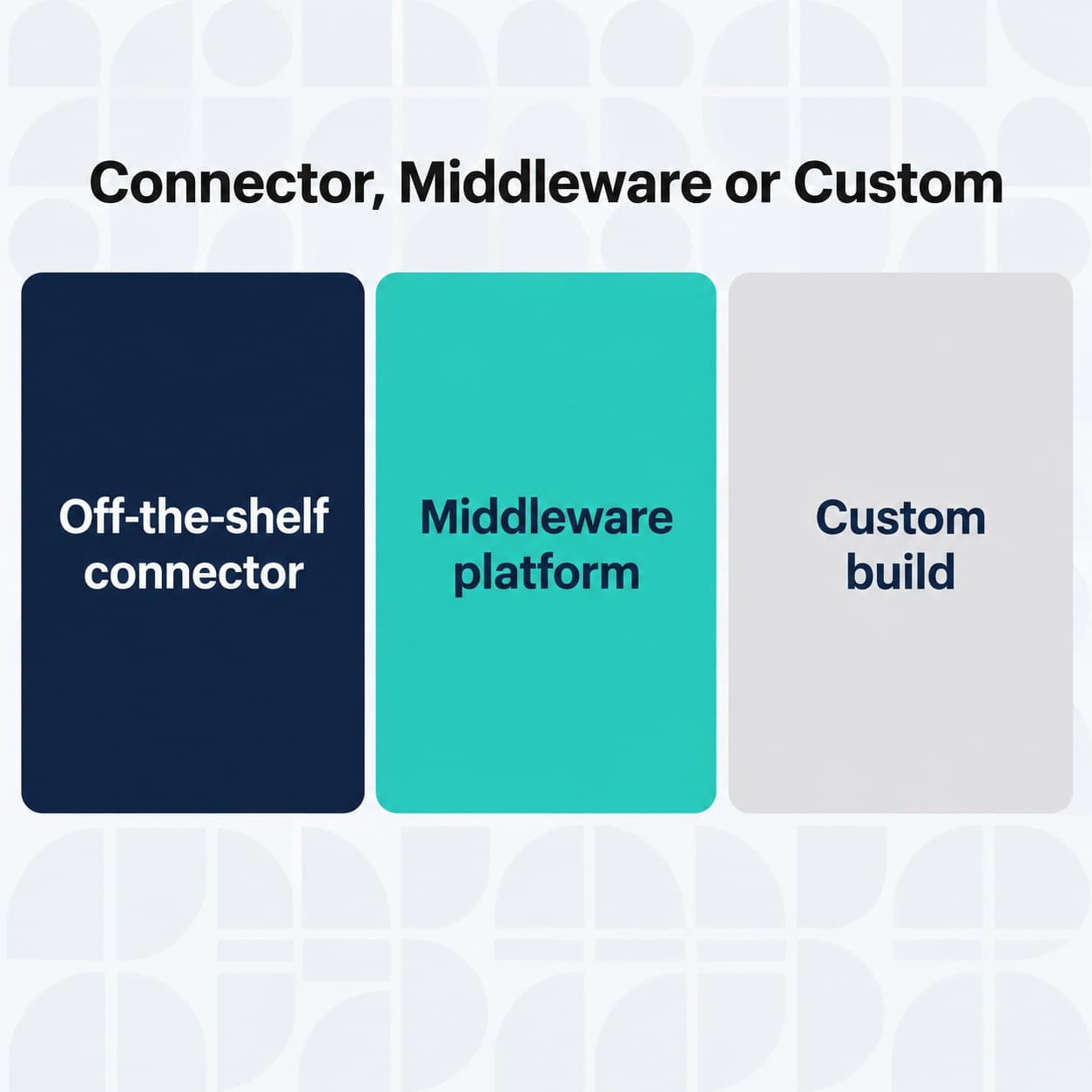
Three integration routes. Custom is the right answer less often than buyers expect.
Route | Right when | Wrong when |
|---|---|---|
Off the shelf connector | Both systems mainstream, mapping conventional | Your process differs from the default |
Middleware platform | Many integrations to manage centrally | A single connection, where licensing dominates cost |
Custom build | Business-specific logic, or integration is the product | A solved problem with an existing connector |
Where Your Systems Run Changes the Sums
Hosting matters too, since running systems in the cloud or on premises affects both the speed an integration can reach and the network setup it has to work within.
If one end is an older system, modernising a legacy application sometimes costs less than integrating around it over and over.
The Security Choice That Changes the Bill
The simplest way to authenticate is an API key, a long string that acts as a password. It is cheap to implement, which is why it is everywhere.
The National Cyber Security Centre is direct about the problem: API keys are prone to theft, have no built-in expiration and offer no granular control over what the holder can do.
Each of those is a cost waiting to land. A stolen key does not expire, so a breach two years ago is still a breach today. A key cannot be scoped, so one issued for reading order statuses can often write to them as well.
OAuth 2.0 costs more to set up. Tokens expire, permissions are limited to specific actions, and you can revoke one integration's access without breaking the others, so a leak adds far less to the long-run API integration cost.
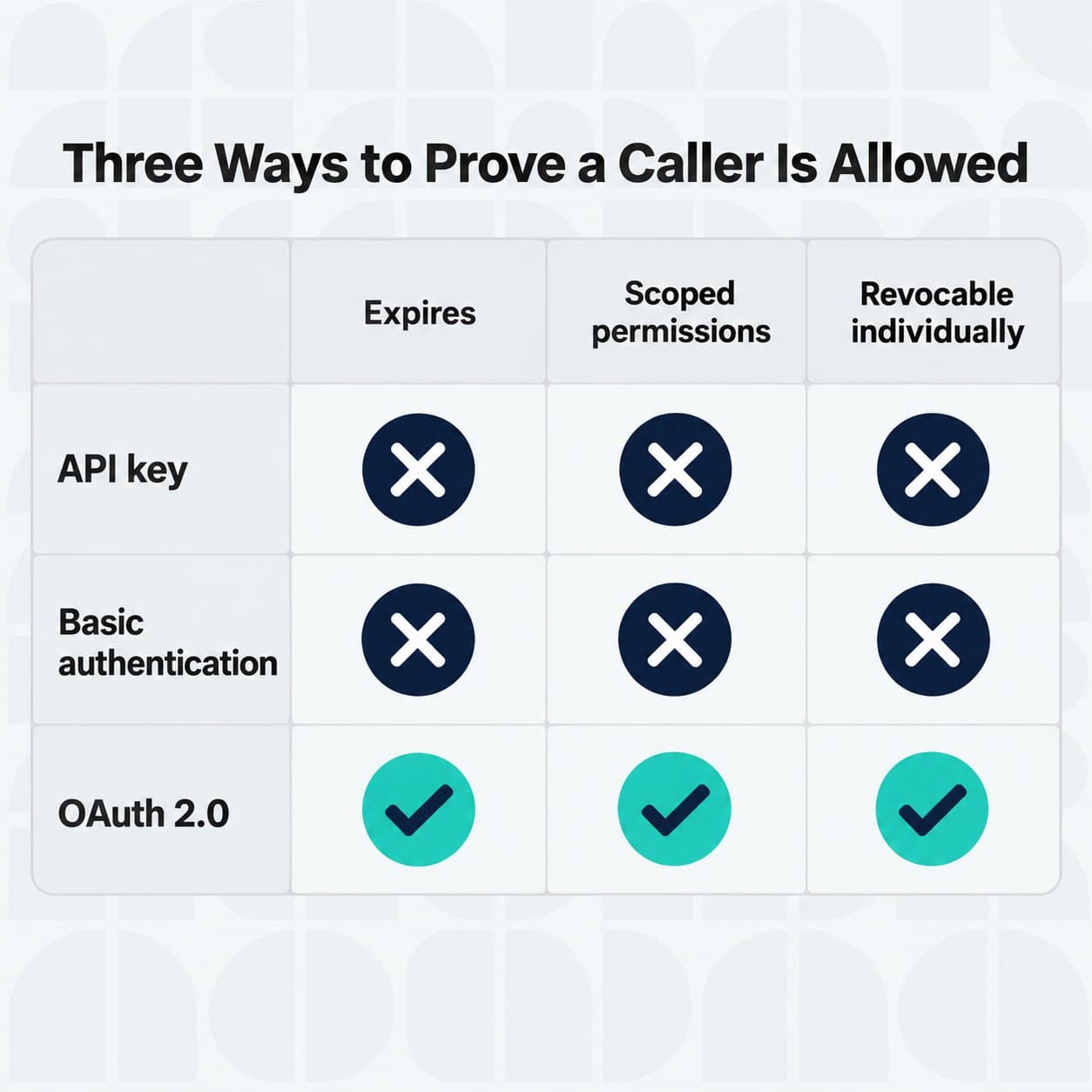
Three ways to prove a caller is allowed, and what each one costs you when it goes wrong.
Method | Expires | Scoped permissions | Revocable individually |
|---|---|---|---|
API key | No | No | Rarely in practice |
Basic authentication | No | No | No |
OAuth 2.0 | Yes | Yes | Yes |
When a supplier says the integration is secure, ask which authentication method they are using and whether one integration's access can be revoked without touching the others. The answer tells you how carefully the rest of the work was priced.
What a Broken Integration Costs You
A failure adds to API integration cost twice: once for the fix, and again for whatever the wrong data did before anyone noticed. Research on real traffic shows which failures dominate.
An analysis of 2.43 million API error responses at the payments company Adyen, published by the IEEE, found 11 general causes of faults. Invalid or missing request data was the most common, which is a field left empty when it should not have been.
A separate IEEE study of cloud API failures found around 60 percent related to stuck or unresponsive calls, 12 percent to slow responses and 19 percent to problems with the output. A call that never returns raises no error, which is why integrations that pass every test can fall over in month four.
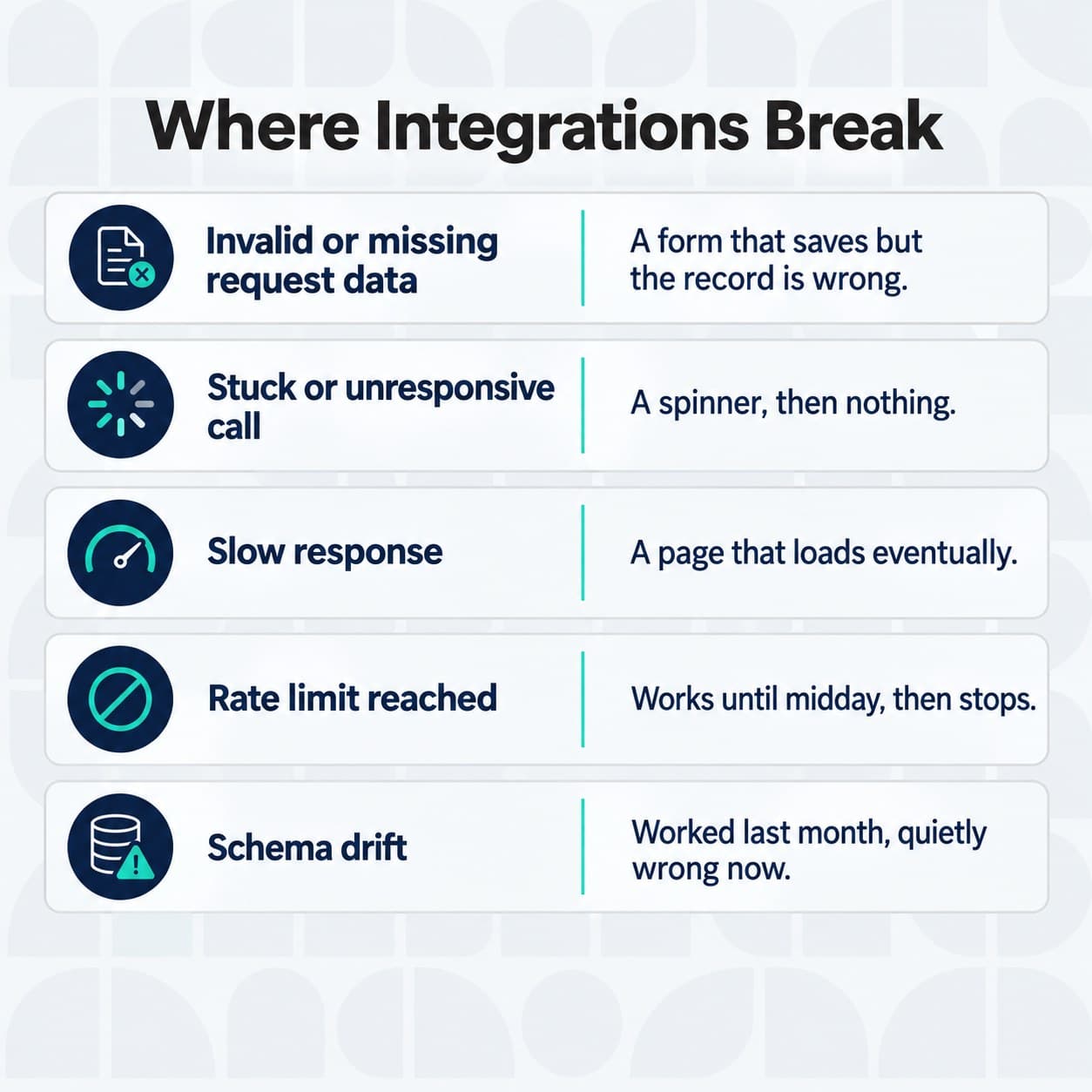
The failures nobody demonstrates during a sales conversation.
Failure mode | What it looks like to a user | What it needs |
|---|---|---|
Invalid or missing request data | A form that saves but the record is wrong | Validation before sending, not after |
Stuck or unresponsive call | A spinner, then nothing | Timeouts and circuit breakers |
Slow response | A page that loads eventually | Caching, and a decision about what to show meanwhile |
Rate limit reached | Works until midday, then stops | Queueing and backoff |
Schema drift | Worked last month, quietly wrong now | Version pinning and change monitoring |
Why These Are Solved Problems
Banks solved them a while ago. Open Banking Limited reported 24 billion successful API calls across the UK ecosystem in 2025, up 27 percent on the year before, moving real money between competing banks.
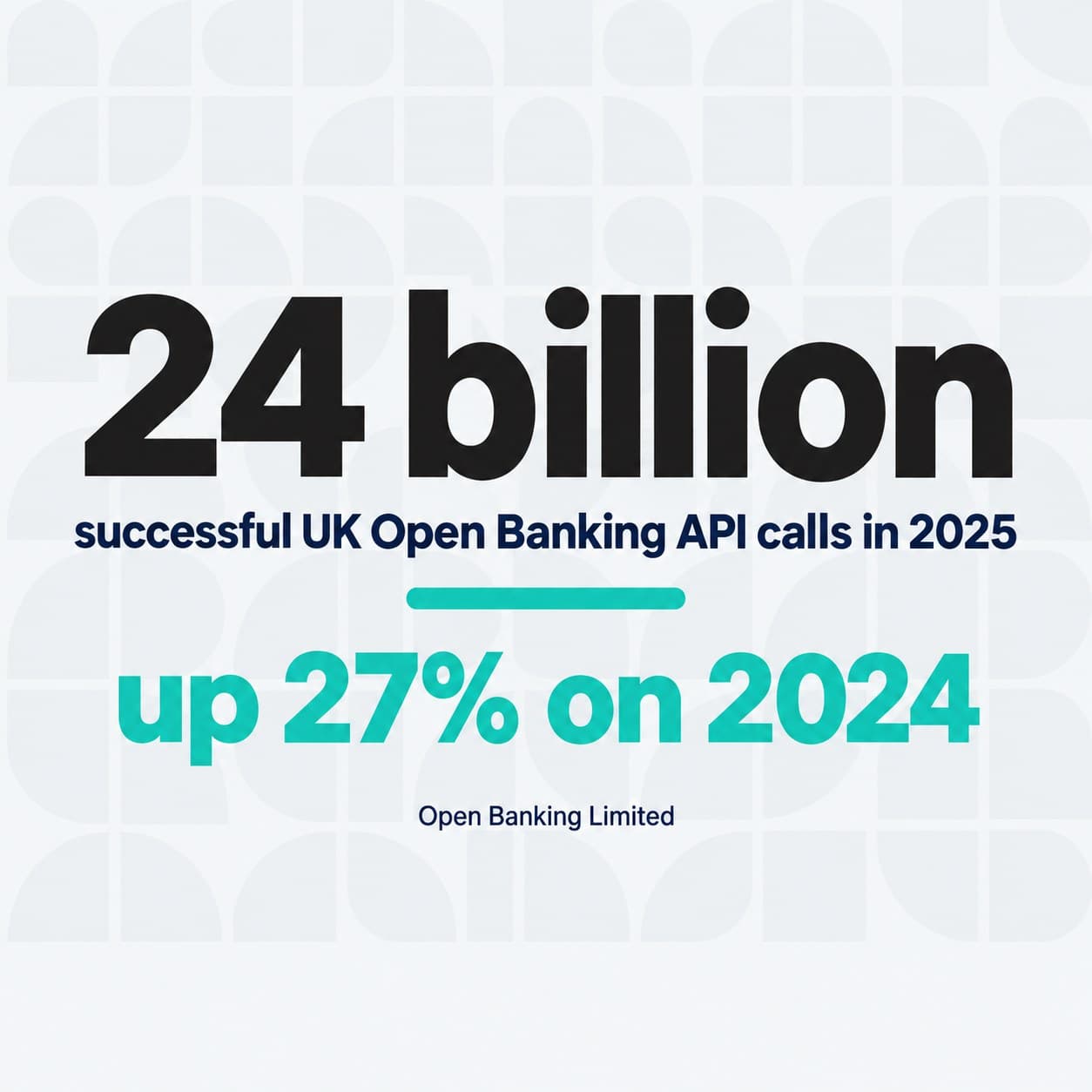
What routine looks like when the numbers get large enough.
Retries, rate limits, token expiry and versioning have been understood for years. A supplier who prices them as exploratory work is telling you about the supplier. The same discipline applies whenever you are moving data between systems.
API Integration Maintenance: What It Costs to Keep One Alive
An integration is a dependency on somebody else's release schedule. That dependency has a running cost from launch day, and over the life of the link it is often the larger share of API integration cost.
Four things need ongoing attention. Monitoring, so a failure is noticed by a system before a customer sees it. Version management, because the partner will retire the version you built against.
Schema monitoring, because fields change without a version bump. Credential rotation, because expiring tokens are the point of OAuth 2.0 and an expiry nobody planned for is an outage.

The gears keep turning after launch. So does the meter.
Each of these is small next to the build and large next to zero, which is the figure that tends to get budgeted. The usual story is an integration that launches well and then has nobody responsible for it until the day it breaks.
Volume adds a further line. An integration that writes often to your systems will expose weak database performance long before the integration itself is the limit.
Standards That Keep the Cost Down
You do not need to be technical to specify standards, and the right ones lower the API integration cost of every later change. The Government Digital Service publishes the standards UK government APIs are held to, and they make a sensible floor for commercial work: REST, the OpenAPI Specification, JSON and OAuth 2.0.
Standard | What it saves you | The question to ask |
|---|---|---|
REST | A predictable interface any developer can pick up | Is it REST, and if not, why not |
OpenAPI Specification | Documentation a machine can read | Can I see the OpenAPI file |
JSON | A widely supported response format | Are responses JSON |
OAuth 2.0 | Expiring, scoped, revocable access | Is authorisation OAuth 2.0 |
Asking for the OpenAPI file is the most valuable question on that list. It describes what the integration does, and a supplier who cannot produce one has usually not written down what they built, which you then pay to rediscover at handover.
This is the layer our development team builds as part of the wider product rather than as a separate purchase. The same applies when building a web application from scratch, where integration points are design decisions rather than late additions.
Frequently Asked Questions
How Much Does an API Integration Cost?
API integration cost depends far more on the partner's documentation and on how different the two data models are than on the connection itself. A conventional link between two well documented systems is days of work, and at a UK median contractor figure of 525 pounds a day that frames the build. The running cost comes on top and lasts as long as the integration does.
Should We Build or Buy API Integration?
Compare the cost over three years. A connector is a permanent subscription, middleware grows with your volume, and a custom API integration is mostly paid up front, then maintained. Paying for custom work to solve a problem a connector already solves is the most common waste in this area.
What Drives the Cost of API Integration Most?
Transformation and error handling. Mapping one system's fields onto another's and deciding what to do with every failure take more hours than making the connection, and they are the first things trimmed from a low quote.
What Does It Cost to Keep an Integration Running?
Monitoring, version changes on the partner's side, schema checks and credential rotation, for as long as the integration exists. Each is small, and none is zero. Budget it as a running line, with a named person responsible for it after launch.
About the Author
Hamish Kerry is the Marketing Manager at Arch, where he's spent the past six years shaping how digital products are positioned, launched, and understood. With over eight years in the tech industry, Hamish brings a deep understanding of accessible design and user-centred development, with a focus on delivering real impact to end users. His interests span AI, app and web development, and the potential of emerging technologies. When he's not strategising the next big campaign, he's keeping a close eye on how tech can drive meaningful change.
You can catch up with Hamish on LinkedIn
Sources
- ITJobsWatch, Integration Developer contract job trends and contractor rates, 17 October 2026. https://www.itjobswatch.co.uk/contracts/uk/integration%20developer.do
- National Cyber Security Centre, Securing HTTP-based APIs, 2026. https://www.ncsc.gov.uk/collection/securing-http-based-apis
- IEEE, An Empirical Study of API Errors in a Payment Platform, August 2018. https://ieeexplore.ieee.org/document/8449231
- IEEE Cloud Computing, Understanding Cloud API Failures, 2018. https://doi.org/10.1109/mcc.2018.022171668
- Open Banking Limited, Open Banking in 2025: now part of the UK's everyday financial life, 29 January 2026. https://www.openbanking.org.uk/insights/open-banking-in-2025-now-part-of-the-uks-everyday-financial-life/
- Government Digital Service, GDS API technical and data standards, 2026. https://www.gov.uk/guidance/gds-api-technical-and-data-standards