
What is User Centered Design? Process and Principles.
Discover what is user centred design and why it matters. Explore principles, steps, and practical tips to build products users love.
What is User Centred Design?.
Share Via:
User centered design is a way of building products in which the people who will use them shape every decision, from the first research session to the final release. Instead of designing on assumption and hoping users adapt, you study how they actually work, build against that evidence, test it with them, and repeat until the product fits. It is the discipline that underpins good UI/UX design.

The research session where a good assumption goes to die.
If your product runs in the browser, our approach to browser-based products shows how discovery and prototyping carry through into the build.
Key Takeaways
- User centered design replaces internal guesswork with evidence from the people who will use the product.
- The method runs on a four-phase loop set out in ISO 9241-210: understand the context of use, specify requirements, produce design solutions, evaluate against them.
- The money case is documented. Returns run from about $3.20 for every $1 in healthcare products up to $100 per $1 across user experience work generally.
- User centred design, user-centric design, human-centred design and design thinking overlap heavily. The differences are scope and vocabulary, not method.
- Accessibility belongs inside the process as a requirement, not bolted on before launch.
What is User Centered Design, Exactly?
User centred design is an approach in which real users are involved throughout the build, and every significant decision gets tested against what they need rather than what the team assumes. It is codified in ISO 9241-210, the international standard covering human-centred design for interactive systems.
A team practising it treats "we think users want this" as a hypothesis with a price tag attached, not as a plan. It has to survive contact with somebody outside the building before it earns a place in the backlog.
Business Centred Design Wearing the Label
The most common failure is business centred design calling itself user centered design. A business has to make money, and this approach does not pretend otherwise. What it does is find the overlap: stakeholders propose, real users validate, and only the ideas that survive both go into the build.
The honest test is blunt. Are you building for your users, or expecting your users to adapt to you?

Stakeholder opinions, gathered here for questioning.
Why User Centered Design Pays for Itself
The strongest argument for the approach is not that it produces nicer products. It is that guessing is expensive and evidence is cheap by comparison.
Forrester's Total Economic Impact study of IBM's design thinking practice measured a 301% return on investment from running a structured human-centred design programme.
The revenue picture points the same way. McKinsey's study of 300 companies found design-led businesses achieved 32 percentage points higher revenue growth over five years than their industry peers.
Most of that value comes from the work you avoid doing. Fixing a usability problem after launch means unpicking code, retraining users and eating the support tickets. Fixing it in a research session means moving a box on a wireframe. One estimate puts the ratio at roughly $1 spent on user research saving around $100 in later development cost.
That is the commercial argument in one line. You are not buying design. You are buying the right to be wrong early, when being wrong is nearly free.
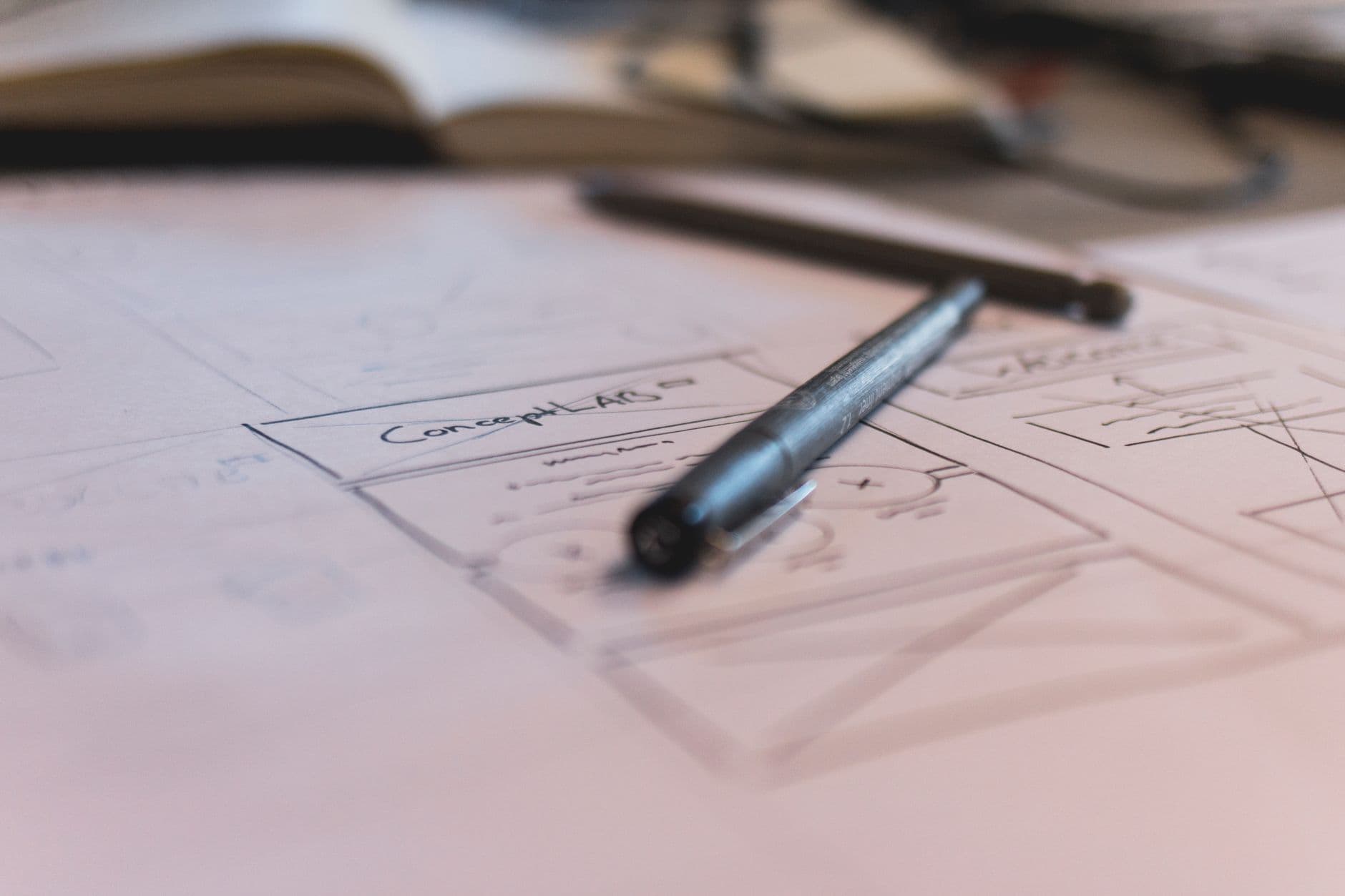
A marker pen: the cheapest way yet found to be wrong.
The User Centered Design Process: the Four-Phase Cycle
The user centred design process is a loop, not a line. ISO 9241-210 sets out four activities, and you keep going round them until the design meets the requirements you wrote down at the start.
Phase 1: Understand the Context of Use
Before solving anything, work out who the users are, what they are trying to achieve, and the conditions they are doing it in. A warehouse worker with cold hands and a cracked screen is a different design problem from an analyst at a desk, even when the task is identical.
This phase is observation, not order-taking. Interviews, contextual inquiry and surveys, the everyday tools of UX research, tell you what people actually do, which is reliably different from what they say.
Phase 2: Specify the Requirements
Raw research is not a requirement. This phase turns observations into statements the team can build against: personas grounded in real interviews, journey maps showing where the experience breaks, and a problem statement written from the user's side of the table.
Skip this and the project drifts, because everyone fills the gap with their own assumptions.
Phase 3: Produce Design Solutions
Now you make things. The goal is not one finished design but several rough ones, cheap enough to throw two away without anybody getting defensive. This is where our designers work fastest and commit slowest.
Paper sketches and low-fidelity prototypes do most of the work. A concept can be killed in an afternoon for the cost of a marker pen, long before a developer opens an editor and the build itself begins.
Phase 4: Evaluate Against the Requirements
Put the prototype in front of real users and watch what breaks. This is where assumptions get settled rather than argued about. The usability testing methods you pick here decide how much you learn.
The findings feed straight back into phase three, and round it goes. The loop stops when the design meets the requirements from phase two, not when the budget runs out.

Watching, not asking. The gap between the two is the whole method.
Core Principles of User Centered Design
Underneath the process sit a handful of principles. Teams that internalise these tend to get the benefit; teams that treat the four phases as a checklist usually do not.
Empathy over demographics. Understanding your user means understanding their goals, environment and frustrations, not their age bracket.
Users as participants, not subjects. Real users belong at every meaningful stage: workshops, prototype reviews, diary studies. Surveying them at the start and the end is not involvement.
Iterate, because the first idea is rarely the strongest one. Design, prototype, test, refine. The cycle is the method, and fast prototyping is what keeps it affordable.
Evidence beats opinion. When a stakeholder view and a research finding disagree, the finding wins, or the process is decoration.
The whole experience counts. Not one screen. Every touchpoint, from the first advert to the support conversation nine months later.
Accessibility is a requirement, not a phase. More on that below.
User Centred vs User-Centric vs Design Thinking vs Human-Centred Design
Four terms, heavy overlap, and a lot of people using them interchangeably. Here is the honest breakdown.

If someone says "user-centric design" in a meeting, they almost certainly mean what you mean. The distinction worth defending is process versus posture, not one word against another.

Phase two, not the fortnight before launch.
How Accessibility Fits into User Centered Design
Accessibility is the clearest test of whether a team means it. If your definition of a real user excludes somebody using a screen reader, keyboard navigation or high-contrast mode, then this is a label rather than a practice.
Handled properly, accessibility considerations enter at phase two as a requirement. WCAG conformance, colour contrast and keyboard operability become things you design against and evaluate against, which is how the four-phase loop is meant to work.
Handled badly, it becomes a compliance sweep three weeks before launch, the most expensive moment to discover the navigation does not work without a mouse. Same argument as every other part of the process: cheap early, painful late.
Including disabled users in phase one research is the part most teams skip. It is also the part that surfaces problems no audit tool will ever flag.

Round two is where the useful findings live.
User Centered Design in Practice: How a Studio Runs It
Theory is tidy. Delivery is less so. In practice a user centered design engagement starts with the discovery stage: interviews, whatever analytics exist, and a session pulling the team's assumptions into the open.
From there: requirements, prototypes, then usability testing with people who match the real audience. Findings go back into the prototype, more than once. The second round is usually the useful one. That loop is the core of how we run a project.
The reason the evaluate phase earns its place is retention. Around 88% of online users say they will not return to a site after a poor experience, which makes a bad first session close to permanent. Testing before release is how you avoid spending your marketing budget driving people towards a door that sticks.
The upside runs the other way too. A well-benchmarked, frictionless experience has been reported to lift conversion rates by up to 400%.
Arch has run this pattern across a range of products. Work on the Deploy platform turned a tool for a specialised workforce into an intuitive experience, and the same thinking shaped projects including Boiler Juice, Findr, My Pension ID and AdaptWell. The Recite Me project ran on the same method.

Cold hands, cracked screen, same task. A different design problem entirely.
Real-World Examples of User Centered Design
The clearest examples are the ones where the constraints were tightest.
Complex B2B and enterprise tools are where the method earns most, because the users have no choice. They cannot uninstall the thing, so the alternative is a workforce working around its own software.
Regulated products are the other strong case. Healthcare is a useful benchmark, with organisations reporting roughly $3.20 back for every $1 invested in user centred design of healthcare products. That is a hard number in a sector where errors are not merely inconvenient.
Consumer products show the effect fastest, because judgement is instant. About 94% of a user's first impression of a product is design-related, and interface design carries most of that verdict. That impression forms in roughly 50 milliseconds, so you do not get a second research session with somebody who left in half a second.
When Should Your Business Use User Centered Design?
Four situations make the case on their own.
You are building something new and the requirements are still opinions. You are redesigning something that works but nobody likes. Your conversion rate is poor and nobody can say why. Or you have accessibility gaps with a deadline attached.
If two or more apply, the cheapest version of this is a discovery phase, not a rebuild. We Are Arch run user centred design as standard rather than as an upsell, which is usually the sign worth looking for when you choose who to work with.
Frequently Asked Questions about User-Centred Design
What is user centered design in simple terms?
Designing with the people who will use the product rather than for an imagined version of them. You research how they work, write requirements from that research, build something rough, test it with them, and improve it until it fits.
Is it user centred or user centric design?
Both are used, and in practice they mean the same thing. "User centred" is the British spelling and "user centered" the American one, both referring to the ISO 9241-210 process. "User-centric" tends to describe intent rather than a defined method, though few people draw that line strictly.
How is UCD different from just asking users what they want?
This is a crucial distinction. UCD goes much deeper than simply running a poll or asking for feature requests. People are experts in their problems, but they aren't always able to imagine the best solution. UCD observes behaviour to understand the why behind actions, uncovering unspoken needs. It's the difference between asking people if they want a faster horse (as Henry Ford famously didn’t say) and inventing the car. It drove our thinking on projects like Boiler Juice.
Is UCD the same as UX design?
Not quite. UCD is the methodology: how you involve users and make decisions. UX design is the craft of building the experience itself. Think of UCD as the "how" and UX design as the "what." A good user experience is the outcome, while UCD is the process most likely to get you there - which is why we’re always keen to talk to businesses about their goals.
What is the difference between user centered design and design thinking?
Design thinking is a general framework: empathise, define, ideate, prototype, test. It applies to services, strategy or almost anything. UCD is narrower and aimed at products with identifiable users, with a standardised four-phase cycle behind it. Most teams running design thinking on a product are doing UCD.
What are the four stages of the user centered design process?
Understand the context of use, specify the user requirements, produce design solutions, and evaluate those solutions against the requirements. It is a loop rather than a sequence, so you return to the design stage each time evaluation turns up a problem.
When in the process should you start UCD?
From the very beginning. The user-centred design process should kick off at the discovery phase, before a single line of code is written. When you integrate UCD from the outset, you build your entire strategy on a solid foundation of user insight, not just internal assumptions. Waiting means you’ll almost certainly end up making painful, expensive changes to a product built on a flawed premise. This approach shaped our development of innovative solutions like My Pension ID and AdaptWell.
Can UCD be applied to B2B and enterprise software?
Absolutely. In fact, UCD is arguably even more critical for complex B2B tools where productivity, accuracy, and efficiency are paramount. Applying UCD principles to internal software reduces training time, minimises costly errors, and boosts employee satisfaction and adoption. Our work on the Deploy platform transformed a tool for a specialised workforce into an intuitive experience, proving its value in a professional setting and showing what’s possible with the right mobile app development.
Is UCD too expensive for startups and small businesses?
This is a common myth. For a startup, UCD is a survival strategy. The real cost isn’t doing research; it's building a product nobody wants or can use. UCD is scalable. Early testing with a handful of users can uncover critical flaws that would cost a fortune to fix post-launch. Lean methods like guerrilla testing are quick and affordable, delivering huge insights that de-risk your venture and shorten the path to product-market fit, as we discovered with our client Findr.
About the Author
Hamish Kerry is the Marketing Manager at Arch, where he has spent the past six years shaping how digital products are positioned, launched, and understood. He has over eight years in the tech industry and a deep understanding of accessible design and user-centred development, with a focus on delivering real impact to end users. His interests include AI, app and web development, and the potential of emerging technologies. Outside campaigns, he keeps a close eye on how tech can drive meaningful change.
You can catch up with Hamish on LinkedIn
Sources
- 40+ Key UX Stats for 2026, Maze, published 26 May 2026.
- The Most Important UX Statistics in 2026, Onething Design, published 20 May 2026.
- User-Centered Design Statistics 2026: ROI, Process & Best Practices, Glorium Technologies, published 11 March 2026.
- UX & UI Design Statistics 2026, Searchlab, published 24 March 2026.
- 40+ Product Design Statistics: UX Metrics, ROI Benchmarks & Data for 2026, DesignRush, published 23 January 2026.
- Latest UI UX Statistics You Need To Know In 2026, MindInventory, published 17 February 2026.
- UX Research ROI: Improve Product Metrics In 2026, UXArmy, published 20 May 2026.
- How to Run a UX Benchmark Study: 2026 Competitive Guide, Parallel, published 16 May 2026.