



Application Design And Development Services: A Buyer's Guide.
What is an application development service? Our guide explains the process, costs, and how to choose the right partner for your project.
Application Development Service: A Complete Guide.
Application design and development services cover the whole job of turning a business problem into working software: discovery, design, engineering, testing, release, and the support that keeps it running afterwards. Buying that as our development service instead of hiring each role yourself means one accountable team owns the outcome from the first workshop to the fiftieth release.
Demand is not cooling. The UK software development market is forecast to reach around £63.6 billion by 2030, on Netguru's 2025 analysis, and a large share of that work is bought in from outside the business.
This guide covers what is included, how the engagement models differ, what service levels to insist on, and what genuinely drives cost and timeline.
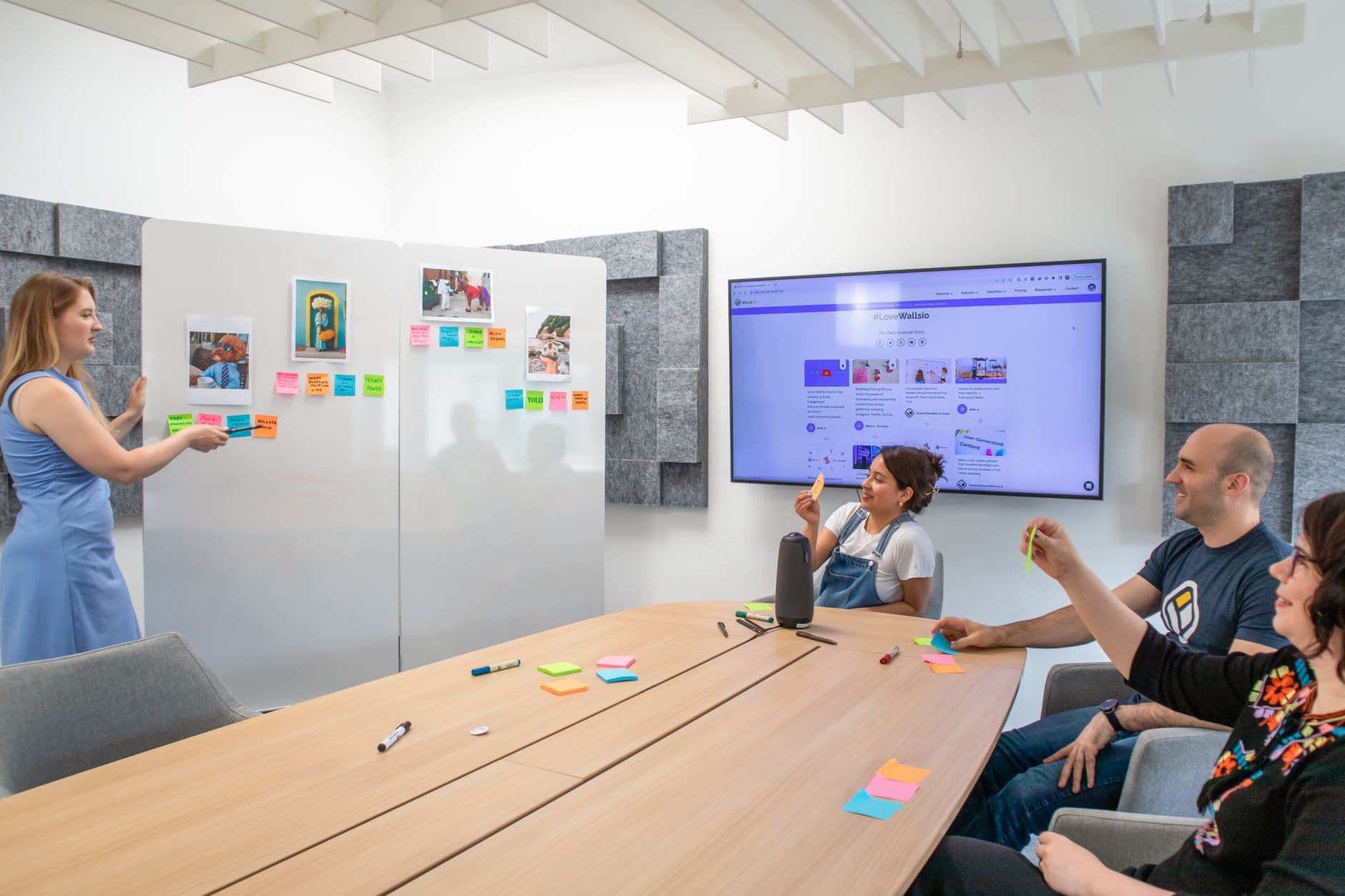
The cheapest place in the world to change your mind is still a whiteboard.
Key Takeaways
- Application design and development services bundle strategy, design, build, QA, release and support into one accountable engagement.
- Three models dominate: fixed scope, staff augmentation and managed service. The right one depends on how much is still unknown.
- Service levels matter more than day rates. Ask about response times, support tiers, and who owns releases.
- Cost is driven by complexity, integrations, and how much clarity exists at the start.
- The UK hiring market is the single biggest reason buyers choose a service over recruiting.
What Are Application Design And Development Services?
Application design and development services are the end-to-end delivery of a software product by an external team, priced and governed as a service rather than a set of hired roles. Design and development sit together deliberately, which is why good teams scope the work properly before anyone writes code.
The scope usually spans six things: understanding the problem, designing the experience, building it, testing it, releasing it, and looking after it once real users arrive. A supplier who only offers the middle three is a coding shop, which is fine if you already have a product team, and expensive if you do not. We break the full remit down in our explainer on custom software development services.
This is a large and growing market to buy into. The UK IT services market is expected to reach roughly $142.94 billion in 2026, growing at about 9.85% a year, according to Market Data Forecast, as more organisations move delivery and support to external providers.
What Full Application Design And Development Services Cover
The honest test of any provider is their deliverables, not their pitch deck. Each phase should reduce the uncertainty facing the next one.
Discovery and product strategy. Stakeholder interviews, user journey mapping, prioritisation, and early technical planning. You should walk out with a defined scope for release one, a phased roadmap, a risk register covering integrations and data, and a recommended technical direction.
Design. User flows and wireframes for the main journeys, high-fidelity screens, and design system components engineers can build from. Unresolved flows are expensive: developers either stop and wait, or they improvise.
Build and QA. Working software reviewed in slices, not revealed at the end. Testing covers functionality, edge cases and environments before users touch anything.
Release and support. Deployment, monitoring, issue resolution, and planned iteration. Arch treats this as part of the same engagement through our web app development service, so it is not a separate contract negotiated after handover.

Every arrow left unresolved here turns into a developer standing still in March.
Engagement Models: Fixed Scope, Staff Augmentation And Managed Service
Application design and development services are sold under three broad commercial models, and the model shapes behaviour. It decides how scope is controlled, how change is absorbed, and how much room exists to learn during delivery. Most buyers compare price first, when the better question is whether the model matches the uncertainty in the product. These commercial choices sit alongside the technical software development approaches a team can take.
Model | Best when | Trade-off |
|---|---|---|
Fixed scope | Requirements are clear and unlikely to move | Budget certainty, but changing direction mid-build gets commercially awkward |
Staff augmentation | You have a product team and need capacity or a specific skill | You keep the management burden and the delivery risk |
Managed service | You want an outcome owned end to end, including support | Requires trusting the provider's process, so their governance has to be visible |
Managed delivery is what people usually mean by application development as a service: a standing team, a rolling backlog, and agreed service levels, without re-procuring every time the roadmap moves.
Hiring pressure explains much of the shift. Around 80% of UK businesses report difficulty recruiting technology professionals, per Limelight Digital's 2026 outsourcing data. If a key hire takes six months or leaves halfway through, the roadmap slips regardless of how good the plan was.
Delivery And Ongoing Support After Launch
Launch is not the finish line. It is the point where your assumptions meet real user behaviour, and products tend to fail in the gaps that open afterwards: ownership drops, priorities shift, and nobody is left making the small necessary improvements.
Application development delivery and support services should therefore cover monitoring, issue resolution, release planning, platform and dependency updates, and prioritised iteration against real feedback.
Continuity is the value. A team that already knows the codebase, the priorities and the commercial context can ship a change in days. A new supplier spends the first month reading. This is why application development and support are worth buying together, because two contracts and two suppliers let each blame the other.
Ask any provider a blunt question: what happens in month seven? If the answer is vague, you are buying a build, not a service.

Month seven. Nobody puts this on a pitch deck, everybody needs it.
Service Levels And SLAs To Expect
This is where most providers go quiet, and where you should push hardest. Service levels are what separate application design and development services from an answerphone and a hopeful invoice.
Get the following written down before you sign:
- Response and resolution targets, split by severity. A payment failure and a typo should not share a queue.
- Support hours and cover, including who answers out of hours and what counts as an emergency.
- Support tiers, and what sits in the retainer versus what is billed as new work. Ambiguity here causes most support disputes.
- Change management, meaning how a new request gets assessed, sized and scheduled without derailing committed work.
- Release ownership, meaning who deploys, who can roll back, and how often releases happen.
A good provider will have answers ready because they have been asked before. A weak one will offer to "sort the details later", which is when the details start costing money.
What Drives Cost And Timeline
Nobody credible can price this before discovery, and any figure quoted in the first call is a guess dressed as a quote. What you can understand upfront are the drivers, and our guide to what app development actually costs walks through the numbers behind them.
Complexity of the domain. A login flow is not a login flow once it needs role-based access, compliance controls and single sign-on against a system built in 2011.
Integrations. Most schedule risk lives in other people's systems: their uptime, their documentation, their rate limits.
Clarity at the start. Ambiguity is not free. It is paid for later, in rework, at the most expensive possible moment.
Platform choice. Cross-platform, native and low-code carry different build and maintenance costs, and for mobile apps the choice shapes the long-term bill. Low-code and AI-assisted platforms are collapsing build times from weeks to hours for suitable use cases, Kissflow reported in May 2026, which changes how some work should be scoped entirely.
Demand is pushing in the same direction: the UK custom software market is projected to grow at around 23.9% a year, according to Market Research Future, so good teams are busy and lead times are real.

Somewhere in there is the integration that owns your launch date.
How A Service Model Reduces Delivery Risk
Structure is the point. A service model puts discovery before build, testing before release, and named ownership after launch; it is how we run a project from start to finish, and it removes the three most common ways projects go wrong.
The returns justify the discipline, most of all for enterprise app development. Enterprise custom software delivers an average return on investment of around 324% over three years, RaftLabs found, which only holds if the thing gets finished, adopted and maintained. All three depend on how delivery is run.
The wider picture supports the same case. The UK digital transformation market is estimated at $70.86 billion in 2026 and projected to reach $140.2 billion by 2031, on Kinabase's analysis, and much of that spend flows to providers because internal teams cannot absorb the work.
Arch has delivered application design and development services this way for products including Boiler Juice and Findr, where design, build and ongoing support sat with the same team.
How To Choose An Application Development Partner
Start with the portfolio, then ignore the visuals. Ask what problem each product solved, what complexity sat behind it, and how the team handled the trade-offs. A polished interface tells you almost nothing.
Then test the process where it actually bends:
- How do you handle scope change mid-project?
- What happens if discovery exposes a major technical risk?
- How often will we see working software?
- Who owns QA, release planning and post-launch support?
The answers should sound operational. A partner worth having will describe what they do when the plan stops being tidy, not just the happy path.
Weigh UK delivery too. Most buyers of application design and development services underrate it: shared working hours, a named team, and the ability to sit in a room when something is going wrong are worth more than a headline rate. Arch has been building software from Gateshead since 2005, with offices in Edinburgh and London.
Finally, judge how they communicate. Heavy jargon, overconfidence before discovery, and weak ownership after launch are the reliable warning signs.

The day rate is the easy question. Ask what they do when the plan stops being tidy.
Frequently Asked Questions
What is application development as a service?
It is a managed engagement where an external team owns design, build, release and ongoing support against agreed service levels, rather than being hired per project or per head. You get a standing team and a rolling backlog. Work is prioritised continuously instead of re-procured each time the roadmap changes.
What is included in application development and support?
Typically: discovery, UX and UI design, engineering, QA, deployment, monitoring, issue resolution, platform updates and prioritised iteration. Confirm what sits inside the retainer and what is billed as new work before signing, because that boundary is where most support disagreements start.
How much do application design and development services cost in the UK?
There is no useful rate card. Cost is a function of domain complexity, the number and quality of integrations, feature scope, platform choice, and how much clarity exists at the outset. A credible provider prices after discovery, once the risks are visible, rather than before.
How long does an engagement take?
It depends on scope and how many unknowns sit in the requirements. Phased delivery is usually the practical route: get a controlled first release live, then build later releases on real user feedback instead of assumptions made months earlier in a workshop.
Start With Discovery, Not A Feature List
If you are weighing up application design and development services, the most useful next step is not collecting quotes. It is getting your problem, users and constraints defined well enough that any quote means something.
Bring the commercial goal and the operational reality. A good partner turns that into scope, sequence and a technical direction you can actually approve, then owns the build and the support that follows.
To talk through a new product, a rebuild, or a more structured route from idea to launch, take a look at our web application development work and get in touch with the team.
About The Author
Hamish Kerry is Arch's Marketing Manager. He has spent the past six years shaping how digital products are positioned, launched and understood. With over eight years in the tech industry, he has a deep understanding of accessible design and user-centred development, with a focus on delivering real impact to end users.
About the Author
Hamish Kerry is the Marketing Manager at Arch, where he has spent the past six years shaping how digital products are positioned, launched, and understood. With over eight years in the tech industry, he has a deep understanding of accessible design and user-centred development, with a focus on delivering real impact to end users. His interests include AI, app and web development, and the transformative potential of emerging technologies. Outside campaigns, he follows how tech can drive meaningful change.
You can catch up with Hamish on LinkedIn
Sources
- Netguru, UK Software Development Market: £63.6 Billion Forecast for 2030 (published 19 November 2025)
- Market Data Forecast, United Kingdom IT Services Market Report (published 1 June 2026)
- Limelight Digital, Outsourcing Statistics (published 15 June 2026)
- Kissflow, Low-Code Trends and Statistics Shaping Enterprise IT in 2026 (published 13 May 2026)
- Market Research Future, UK Custom Software Development Market Report (published 6 April 2026)
- RaftLabs, Custom Software Development Statistics (published 20 July 2025)
- Kinabase, Digital Transformation Tools for UK Businesses (published 9 June 2026)