Speed mattered, so we built the engagement around collaboration and kept handovers short.
Our designers created shared working environments in Figma and worked actively alongside the Super Benji team throughout an intensive two-week sprint. This gave both teams visibility over work as it developed, allowing ideas to be discussed, refined, and agreed quickly.
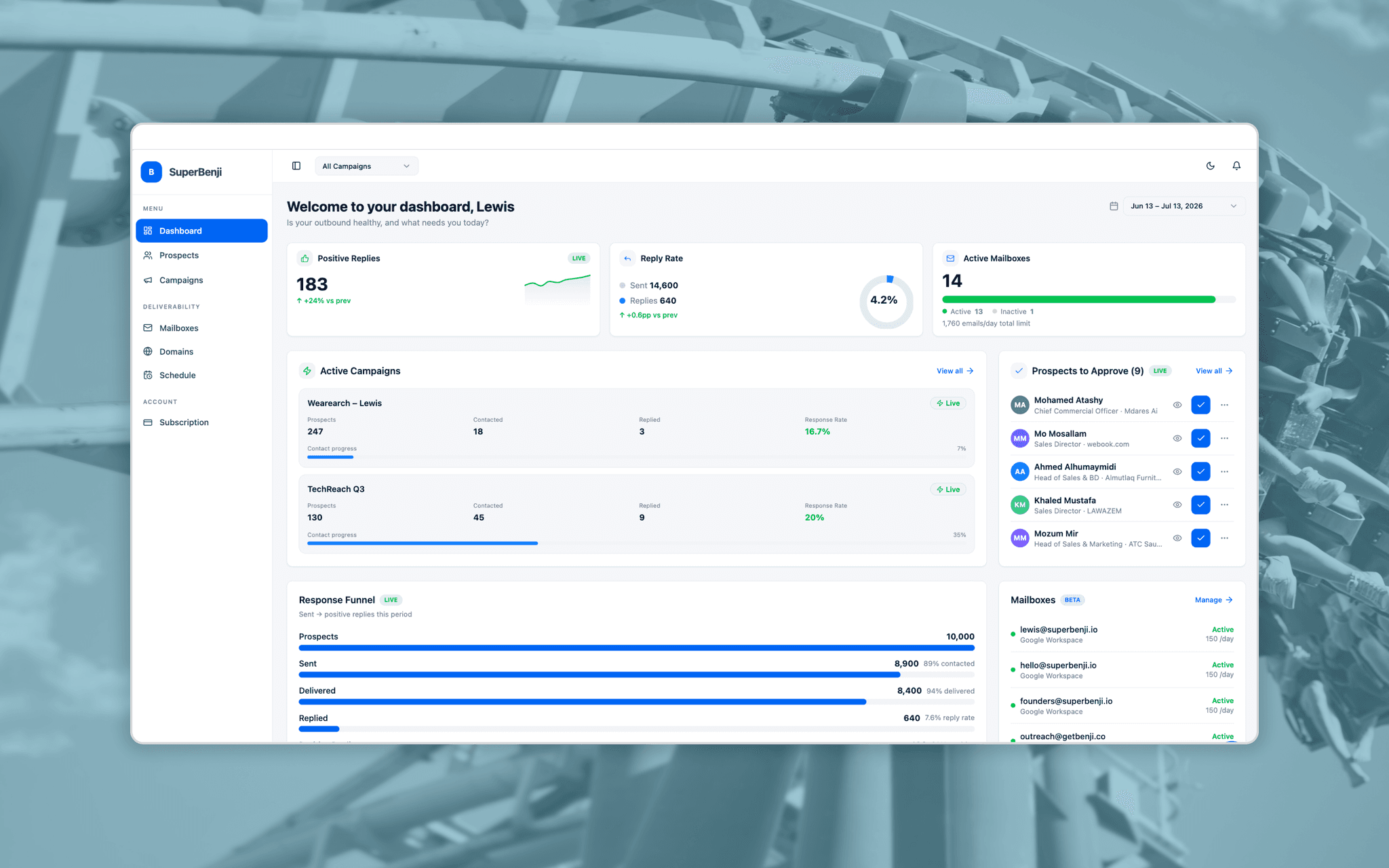
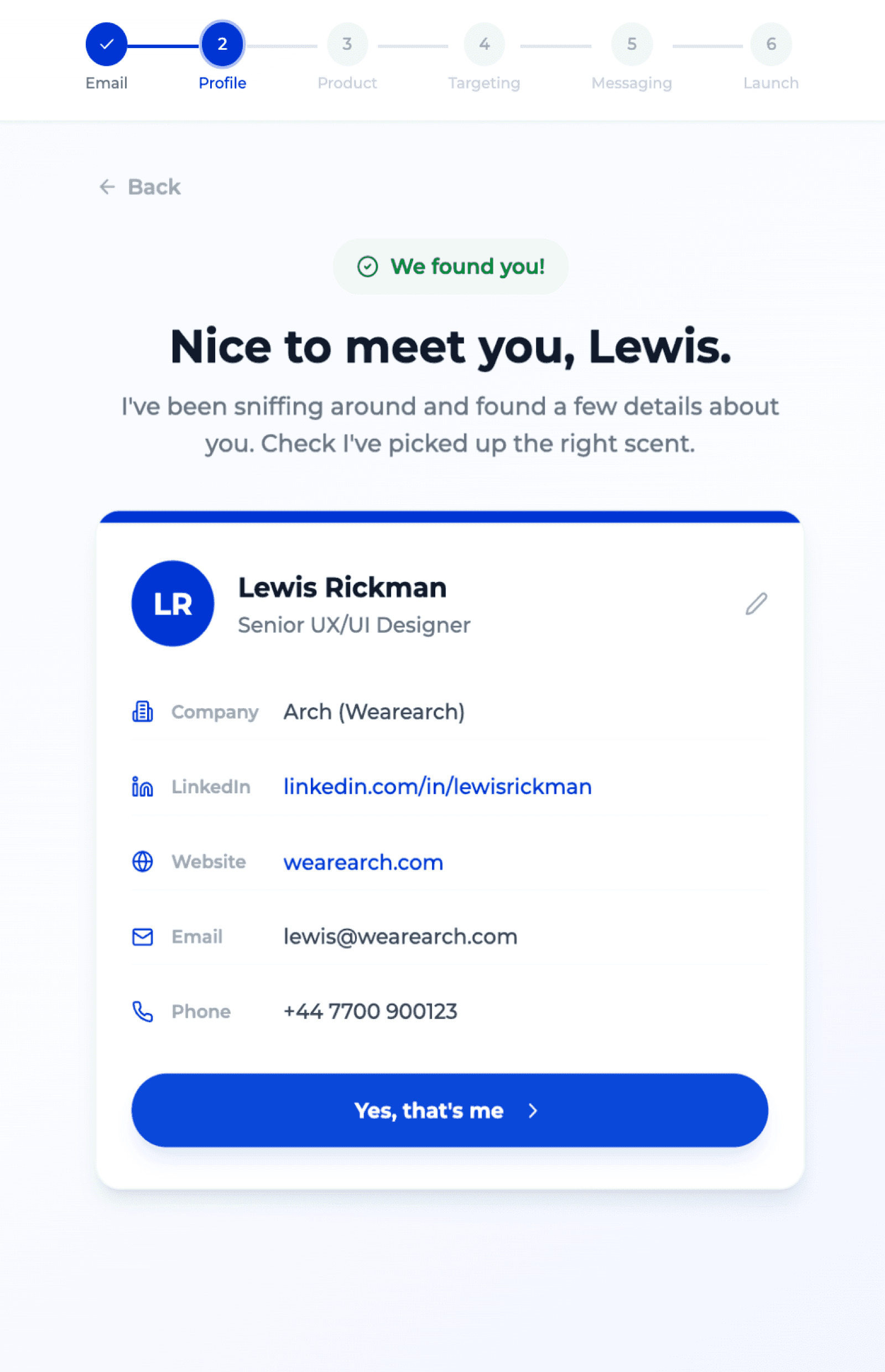
We began with a focused UX/UI audit of the existing platform, looking closely at onboarding, account completion, navigation, messaging, and potential points of friction.
From there, we moved rapidly into design.
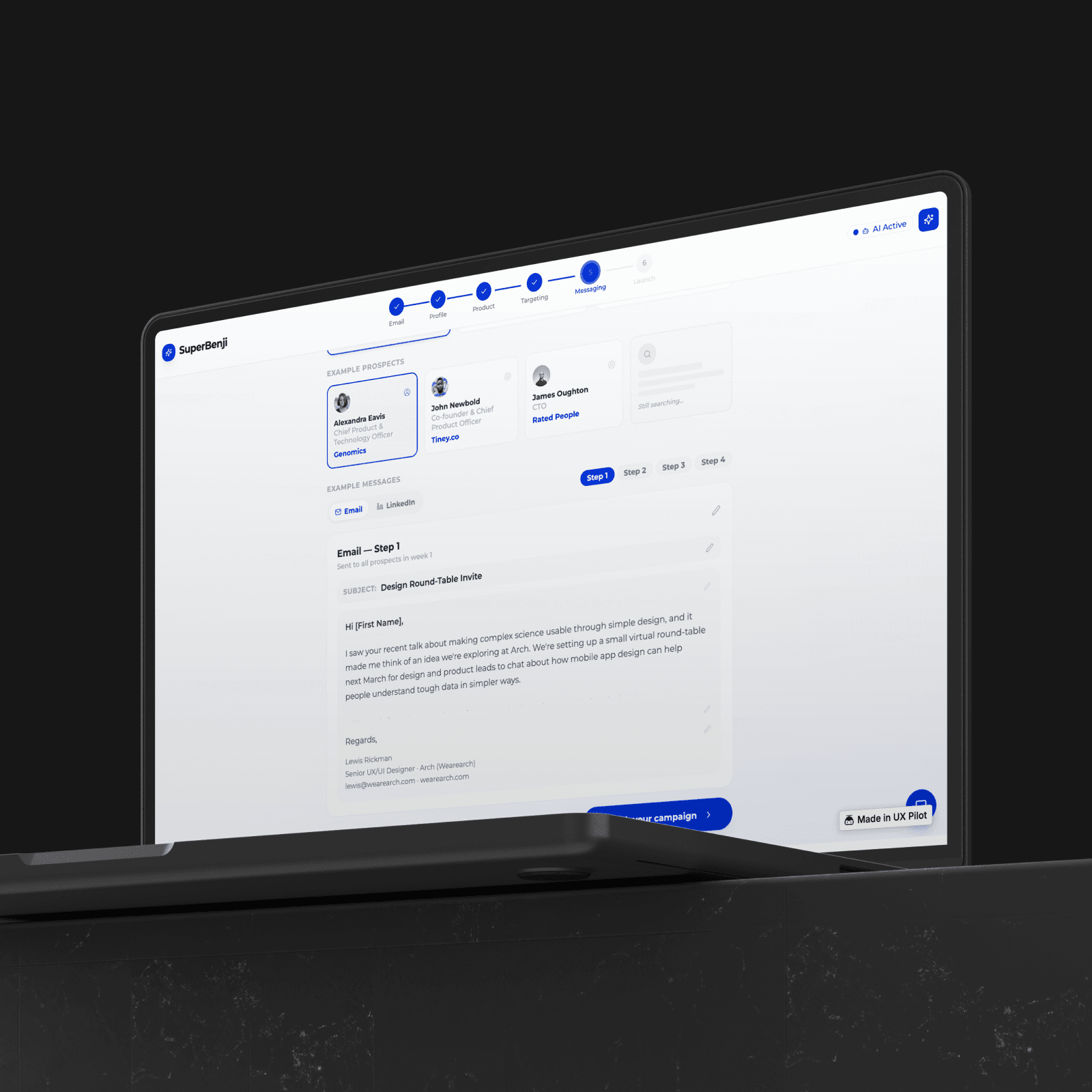
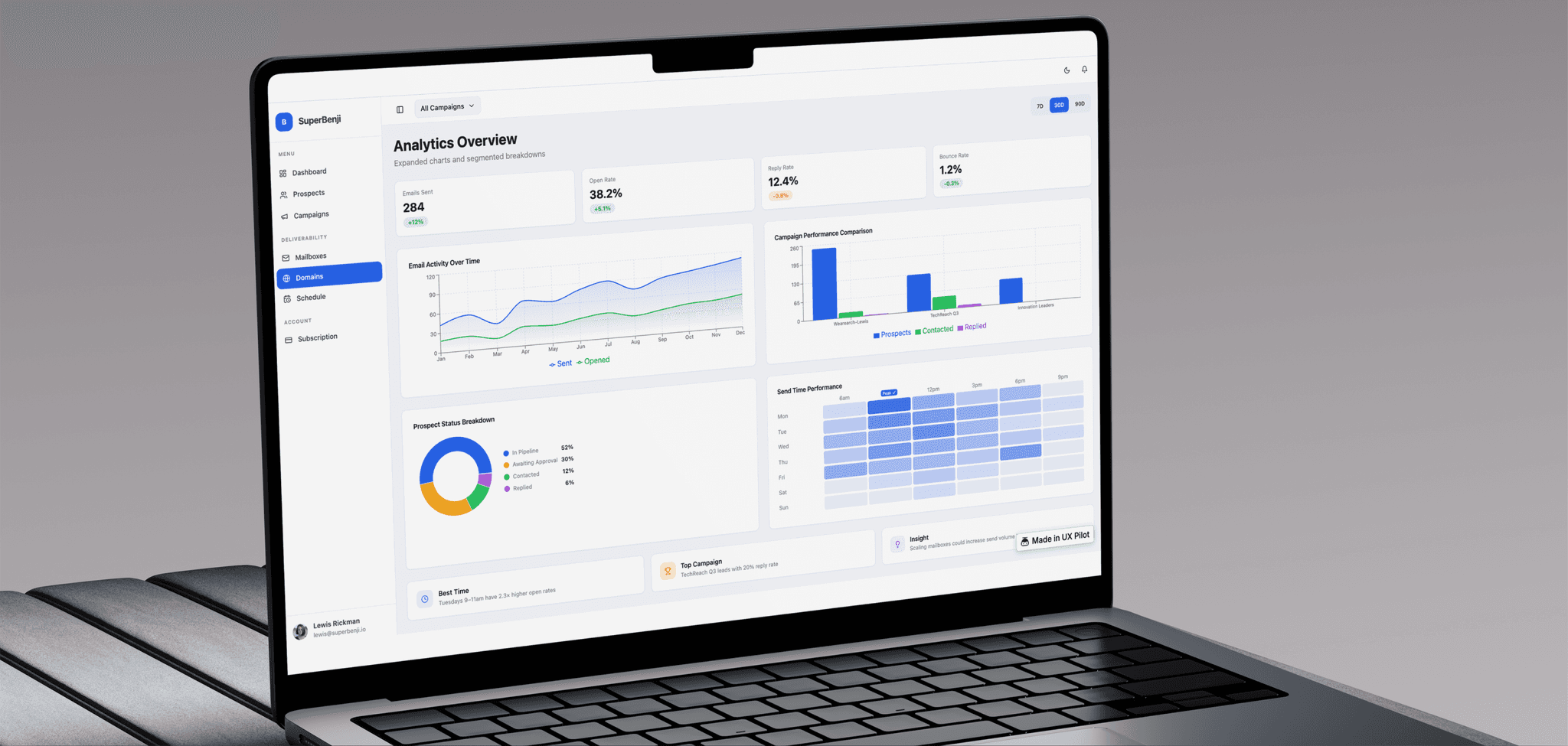
Wireframes and UX improvements were developed collaboratively, with particular attention paid to helping users understand their progress and what they needed to do next. We also explored gamification opportunities that could make account completion more engaging without adding unnecessary complexity.
Our designers did not disappear for two weeks and return with a finished concept. They worked in an agile rhythm with Super Benji throughout, and feedback became part of the design process from the start.
That meant there was very little distance between design and development. Once designs were signed off, Super Benji's developers could immediately begin turning them into working product improvements.