Our Work

Fitz Coatings.

Through a focused R&D and discovery project, we investigated how image analysis, artificial intelligence, and user input could work together to detect corrosion and calculate the percentage of a surface affected. Rather than moving directly into development, our goal was to test the idea, understand its limitations, and give Fitz Coatings a clear technical blueprint for what could come next.

Fitz Coatings

Client

Engineering

Sector

Mobile App

Product

2020

Year

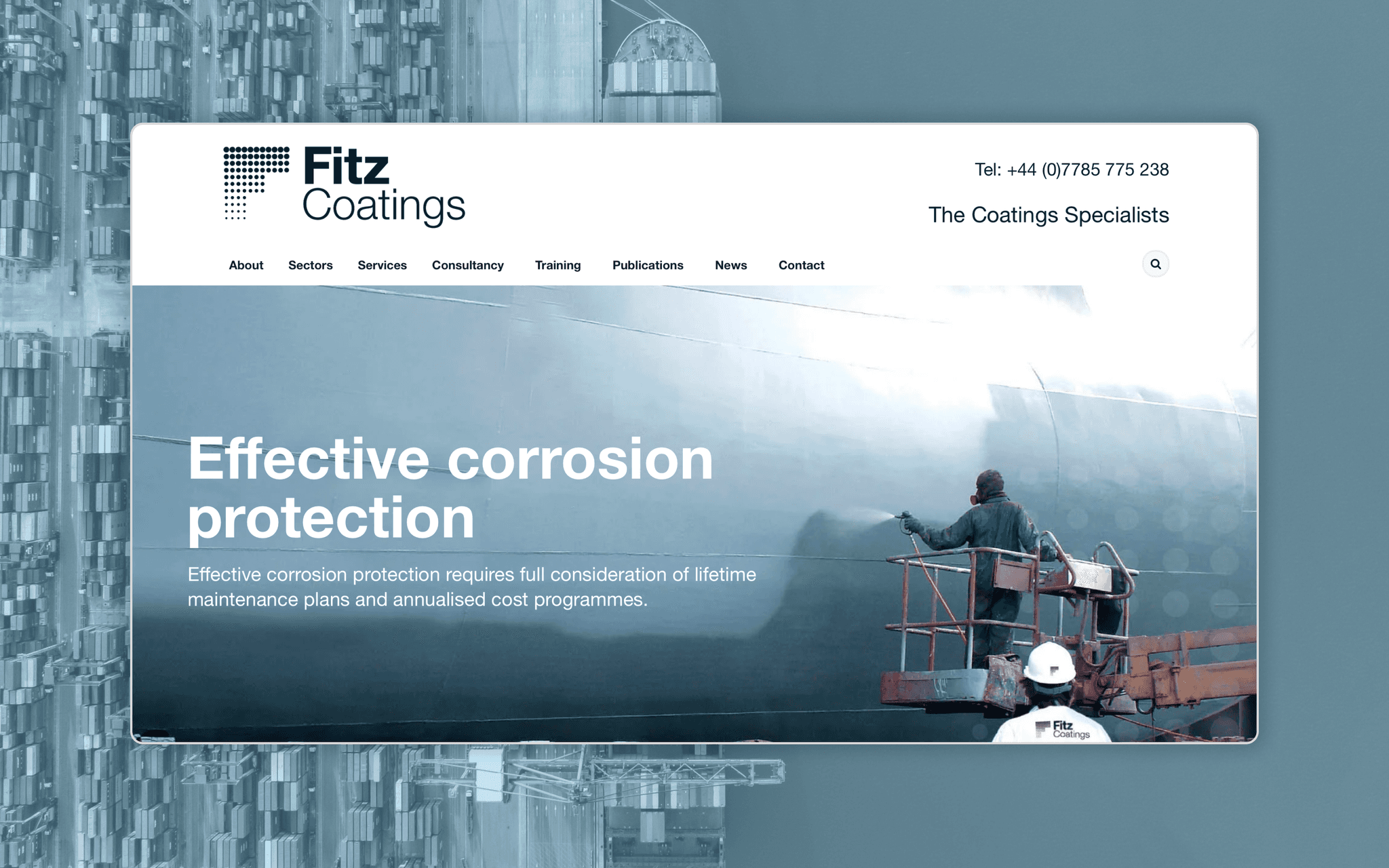
Fitz Coatings header image

IDENTIFYING THE PROBLEM

Taking the Guesswork Out of Corrosion Assessment.

Assessing corrosion is skilled work. When inspecting a surface, professionals may need to estimate the percentage affected by corrosion and use that assessment to determine its severity. The challenge is consistency. Visual estimates can vary between individuals, making it difficult to achieve a repeatable assessment. Fitz Coatings saw an opportunity to explore whether technology could support professionals by introducing a more objective method of analysing corrosion.


The concept was a tool capable of analysing a photograph, identifying areas of corrosion, and calculating the percentage of the surface affected. This could then be considered alongside RI ratings to provide users with a suggested guideline for the level of corrosion shown.


The potential went beyond specialist assessment. The same technology could also become a teaching tool, helping people develop their ability to recognise and evaluate different levels of corrosion.


Before investing in a full product, Fitz Coatings needed to know whether the idea was technically achievable.


Key challenges included:

  • Identifying corrosion accurately within photographs.
  • Accounting for different surfaces, conditions, and lighting.
  • Calculating corrosion as a percentage of the overall surface.
  • Understanding where AI detection could be relied upon and where human input would still be required.
  • Exploring how RI ratings could support the assessment.
  • Establishing the technical limitations of the concept before full development.
  • Creating a practical roadmap for taking the idea from research into a working product.
86%of UK international freight by weight travels by sea
429.7M tonnesof freight handled by UK ports in 2024
83,039cargo vessel arrivals at UK major ports in 2024

CRAFTING THE SOLUTION

Testing the Idea Before Building the Product.

Rather than jumping directly into development, we approached the project as a focused R&D exercise.


Working with Fitz Coatings, we explored the proposed user journey and investigated the technical, analytical, and algorithmic approaches required to turn a photograph into a meaningful corrosion assessment.


Our proposed approach combined automation with professional judgement. AI-based image analysis could initially identify and highlight areas likely to contain corrosion. The user could then inspect the image in greater detail, zooming into specific areas and manually refining the selection where greater accuracy was required.


Once the affected areas had been identified, the proposed system could calculate the percentage of corrosion across the supplied surface area, providing a more consistent guideline for assessment.


A proof of concept allowed us to test the viability of this approach without investing prematurely in a full production application. The focus was deliberately functional rather than aesthetic, helping us understand what could be achieved, where limitations existed, and which areas would require further development.


The resulting Proof of Concept Document captured our findings, the proposed technical approach, the likelihood of success, known limitations, and the steps required to progress towards a complete corrosion detection tool.


More importantly, it gave Fitz Coatings a development blueprint grounded in research rather than assumption.

WHAT WAS

Success for Fitz Coatings.

The project gave Fitz Coatings a clearer understanding of how its corrosion detection concept could translate into a digital product, before committing to the cost and complexity of full development. Through discovery, technical investigation, and proof-of-concept work, we were able to assess the feasibility of the proposed technology and document a practical route towards implementation.


The R&D phase delivered:

  • A feasibility assessment for image-based corrosion detection.
  • Investigation into AI-assisted image analysis.
  • A functional proof of concept focused on the core assessment process.
  • A documented approach for calculating corrosion coverage.
  • Exploration of combined automated and manual corrosion identification.
  • Identification of technical limitations and factors affecting accuracy.
  • An assessment of the concept's likelihood of success.
  • A proposed technical and algorithmic approach.
  • A development blueprint for a future production-ready application.


The result was more than an idea for a new tool. Fitz Coatings gained the evidence and technical direction needed to make an informed decision about its future development.

Got an idea? Let us know.

Looking to kickstart your project or find the perfect team to bring your new product to market? Get in touch with us today.