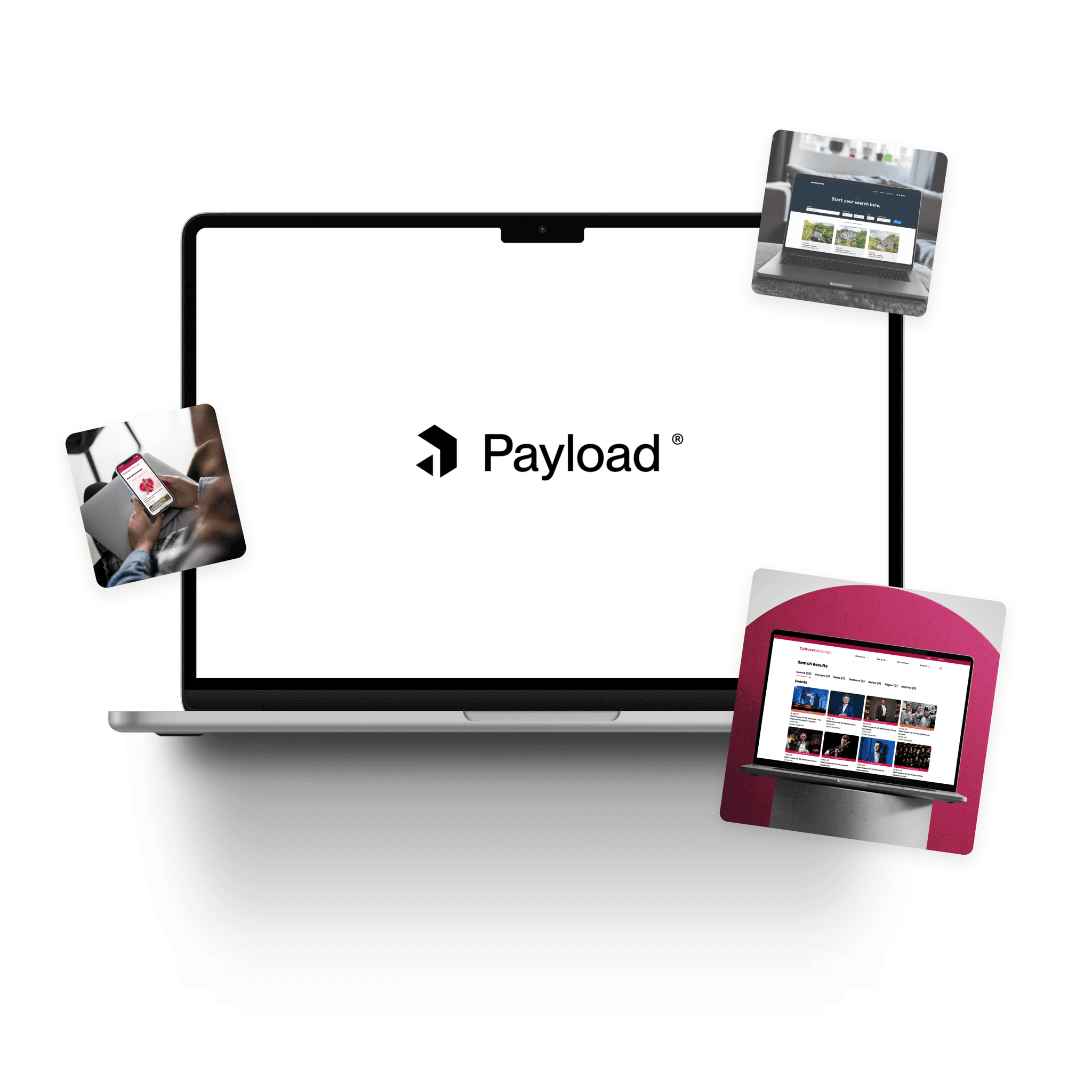
Payload CMS logo on laptop

Payload CMS: Content management that works beyond the website.

Payload gives us the flexibility to build content-rich websites, digital platforms and applications without separating content management from the wider technology behind them. Built with TypeScript and closely integrated with Next.js, it combines a customisable editing environment with the tools needed to manage structured content, user accounts and more complex digital functionality. For us, that means fewer restrictions when a project needs something beyond a conventional CMS. For your team, it means a platform that makes content easier to manage while giving the wider product room to grow.

PAYLOAD CMS

A CMS built for more connected digital experiences.

Payload is an open-source, headless content management system designed to give developers control over how content, data and functionality are structured.


Rather than prescribing how a website should look or behave, Payload provides the tools to build a content platform around the requirements of the project. Its React-based administration interface gives content teams a central place to manage information, while its APIs and development framework allow that information to be used across websites and applications.


That flexibility is a big reason we use it.


Through our web development services, we build digital experiences that often need to connect content with other systems, audiences and workflows. A website might need to manage hundreds of events, connect with an external booking platform, or give different teams responsibility for different areas of content.


Payload allows us to bring those requirements together without making the CMS an obstacle.


And because its content structures are defined in code, we can create reusable components, connected data models and editing workflows that suit the people managing the platform.
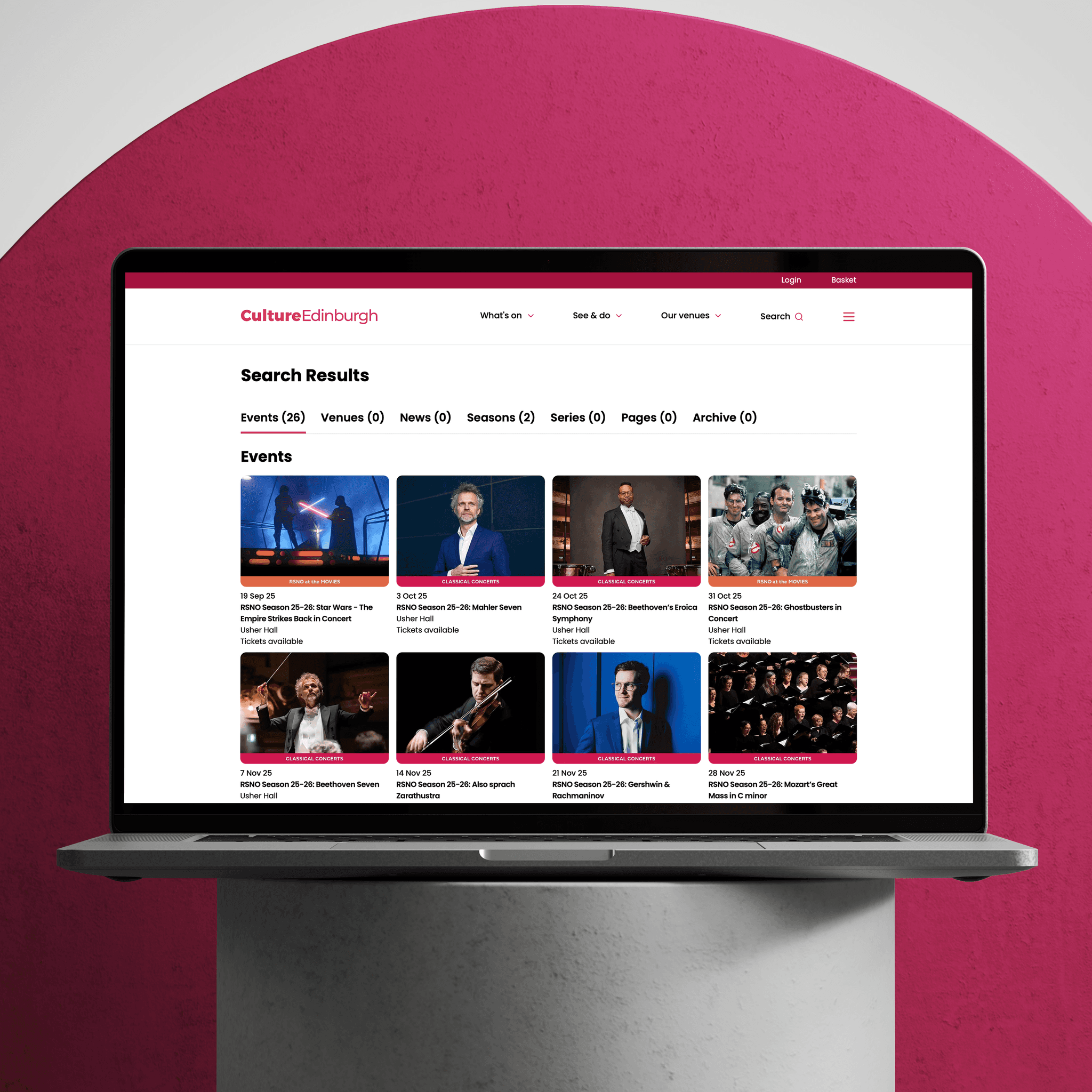
Culture Edinburgh website on laptop

BUILT FOR COMPLEXITY

From content-rich websites to connected digital platforms.

Payload is well suited to projects where content is only one part of a larger digital experience.


It can power marketing websites, publishing platforms, customer portals, directories and applications that need to manage content alongside structured data and custom functionality.


That range matters.


An organisation might begin with a website that publishes news, services and events, but later need to introduce user accounts, personalised information, complex search, external integrations or multiple publishing teams.


With Payload, we can plan those capabilities as part of a connected platform rather than treating each requirement as a separate system.


For organisations investing in bespoke web applications, that creates opportunities to bring content management and application functionality closer together.


It's particularly valuable when the project involves multiple content types and relationships. Events might connect to venues, venues to locations, and individual listings to external booking systems, all managed through a structure designed around the organisation's needs.


That means greater control over how information is organised, presented and developed over time.

KEY BENEFITS

Here's why we use Payload CMS.

  • Headless Flexibility
    Payload delivers structured content via clean APIs, so we can build frontend experiences in any framework or language.
  • Fully Custom Schemas
    Every field, relationship and content structure can be defined in code, so we can model data as your product requires.
  • Built-in Authentication
    Native support for authentication and access control makes it easy to manage user roles, permissions and gated content.
  • Custom Admin UI
    The admin panel can be styled, extended or fully customised to suit editorial workflows and branding requirements.
  • Performance Optimised
    Payload is fast by default and easy to scale, which suits high-traffic applications and content-heavy platforms.
  • TypeScript Native
    Full TypeScript support improves developer experience and helps us write reliable, maintainable code across the project.

MARKETING

Payload for Marketers.

Your CMS should give your team control over content without making every update dependent on a developer.


Payload offers a flexible editing environment that we can configure around the people responsible for maintaining your website or digital platform.


Rather than presenting every available technical option, we can structure the interface around the content your team actually manages, with reusable blocks, clearly labelled fields and publishing workflows suited to different responsibilities.


That matters when a platform has multiple content types, teams or approval requirements.


What content teams get:

  • Flexible Page Building: Create and manage pages using reusable content blocks that maintain consistency across the website.
  • Drafts & Version History: Prepare changes, review earlier versions and manage content updates with greater confidence.
  • Content Preview: Preview unpublished content through a configured front-end preview experience.
  • Asset Management: Manage images, documents and other media through the administration interface.
  • User Roles & Permissions: Configure access around the responsibilities of different users and teams.
  • Multilingual Content: Manage localised content across different languages using a structured content model.


The result is an editing experience shaped around your organisation, supported by the flexibility of a modern development framework.

LATEST WORK

Our Web Projects.

OUR WEB WORK

Learn more about our web development work.

The value of a CMS becomes much clearer when you see how it supports a real digital product.


Our web development work combines content strategy, user experience, bespoke functionality and integration to create platforms that are easier for organisations to manage and more useful for the people accessing them.


Culture Edinburgh x Edinburgh Council

A particularly relevant example is our work with the City of Edinburgh Council.


The Council's cultural services previously operated across five separate websites, creating fragmented visitor journeys and additional work for a small communications team.


We helped bring venues, events, museums and services together within a single digital platform built using Payload CMS.


The new experience connects structured content with Spektrix ticketing, supports flexible event discovery and provides the Council's team with a more manageable publishing environment.


It's a good example of where a CMS needs to do more than manage pages. It needs to support a connected digital experience that works for both the organisation and its visitors.


Explore the Culture Edinburgh case study

WEB APPLICATIONS

When content and functionality need to work together.

Some digital platforms begin as websites but gradually become something more complex.


They may need user accounts, personalised dashboards, payment functionality, external integrations or information that changes according to who is using the platform.


Payload can provide a useful foundation for these projects by bringing content management and application functionality into a connected architecture.


Through our web application development services, we can design the wider product around those requirements rather than allowing the CMS to dictate what's possible.


That might involve connecting an existing CRM, introducing custom business logic, developing advanced search or managing information across multiple front-end experiences.


We can also combine Payload with our UI/UX design expertise to create interfaces that work for both public users and the teams administering the system.


The result is a platform where content, design and functionality work together rather than existing as separate parts.

Got an idea? Let us know.

Looking to kickstart your project or find the perfect team to bring your new product to market? Get in touch with us today.

PAYLOAD CMS FAQs

Payload CMS FAQs.

What is Payload CMS?

Payload is an open-source, headless CMS built with TypeScript. It provides a customisable administration interface, APIs and development tools for managing structured content and creating modern websites and applications.

It's particularly useful when a project needs flexible content structures, custom functionality or close integration between a CMS and the wider web application.


What is Payload CMS used for?

Payload can be used to power websites, publishing platforms, ecommerce experiences, customer portals, directories and applications that manage structured content.

Because its content models and functionality can be customised, it's well suited to projects that need more than a conventional website editor. You can see an example in our Culture Edinburgh project.


Is Payload a headless CMS?

Yes. Payload is headless, meaning content can be managed independently of how it is displayed.

Developers can access content through APIs or integrate Payload directly within a Next.js application. This provides flexibility over the front-end experience while keeping content management centralised.


Is Payload CMS built on Next.js?

Payload integrates directly with Next.js and is designed to work within modern TypeScript and React applications.

This allows developers to combine content management with custom application functionality, while using Next.js to build the front-end experience.


What's the difference between Payload and Statamic?

Both are flexible content management systems, but they use different technology foundations.

Payload is built with TypeScript and integrates with Next.js, while Statamic is built on Laravel and PHP.

Payload can be particularly suitable for applications using a TypeScript-focused architecture, while Statamic is often a strong option for content-led projects built around Laravel. The best choice depends on your project's content, functionality and technical requirements.


Can Payload CMS manage multilingual websites?

Yes. Payload supports content localisation, allowing fields and content to be managed across different languages.

We can configure localisation around the requirements of the website, including language-specific content, publishing needs and front-end presentation.


Can Payload CMS integrate with other business systems?

Yes. Payload can connect with external services through APIs, hooks and custom development.

That makes it possible to integrate services such as CRMs, ticketing platforms, payment systems and other business applications, subject to their available integration capabilities.

Our Edinburgh Council case study demonstrates this through its Spektrix ticketing integration.


Can you migrate an existing website to Payload CMS?

Yes. We can plan and deliver migrations from an existing CMS, including content structures, assets, integrations, URLs and redirects.

We also use migration projects as an opportunity to improve how content is organised and managed, rather than simply reproducing the limitations of the previous platform.


Is Payload CMS suitable for large or complex websites?

Yes. Payload can support complex content structures, multiple user roles, extensive data relationships and custom functionality.

As with any platform, scalability depends on the wider application architecture, hosting infrastructure and implementation. We plan those elements around the needs of the project.


Can Arch support an existing Payload CMS website?

We can assess an existing Payload implementation to understand its architecture, content model, integrations and development requirements.

Depending on the project, that may involve improving existing functionality, introducing new content features, modernising the platform or supporting its ongoing development.