Filament logo on iphone

Filament.

Filament gives us a powerful way to build intuitive administration panels, operational dashboards and internal business tools using Laravel. With flexible components for managing data, workflows and application functionality, it helps us create the interfaces organisations need without developing every element from scratch. For us, that means more time focused on the functionality that makes your software valuable. For your team, it means tools that feel straightforward to use, even when the processes behind them are anything but simple.

FILAMENT

Filament makes internal dashboards simple, elegant, and fast to build. It’s our go-to tool for managing data-rich applications with ease.

Filament is a Laravel-based admin panel toolkit that we use to create intuitive back-office interfaces with minimal effort. It comes with beautifully designed UI components out of the box and offers powerful customisation options that help us tailor admin experiences to your project’s exact needs. Whether we're building a simple content manager or a full-featured operational dashboard, Filament gives us the speed and flexibility to deliver.

We rely on Filament when our projects need internal tooling such as user role management, CRUD operations, data visualisation, and workflow tracking. Because it’s tightly integrated with Laravel, it fits our development stack and lets us move quickly without losing performance or control. Its developer-friendly API and extensibility help us build admin panels that are functional and easy to use.

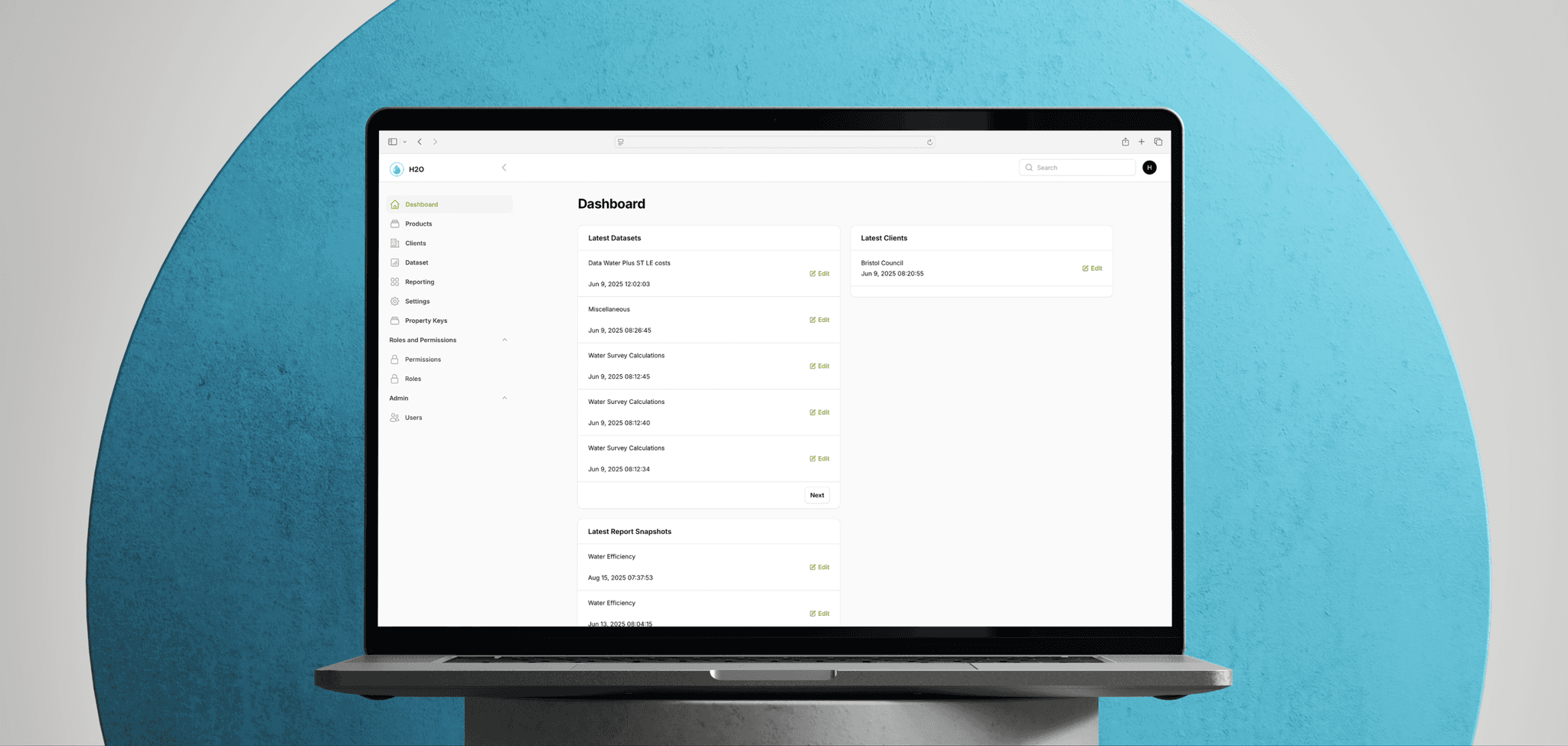
H2OiQ Web application on a laptop with a blue background

KEY BENEFITS

Here's why we use Filament.

Faster, More Focused Development

Filament provides reusable components for forms, tables, dashboards and administration panels. That means we can spend less time recreating common functionality and more time developing the processes and features that make your software valuable.


Built Around Your Workflows

Every organisation manages information differently. Filament allows us to customise screens, fields, actions and navigation around how your teams work, rather than forcing established processes into a generic administration interface.


Powerful Data Management

Filament makes it possible to create interfaces for viewing, searching, filtering and updating information. From customer records and transactions to operational data and application settings, we can make complex datasets easier to work with.


Connected to Laravel

Filament works directly within Laravel, allowing administration interfaces to use the application's existing models, relationships and business logic. This helps us develop connected systems without unnecessarily duplicating functionality.


Flexible Access & Permissions

Different teams often need different levels of access. Filament supports authentication within Laravel applications, and we can implement appropriate authorisation rules, policies and permissions to control what users can see and do.


Designed to Grow

Filament's extensible architecture allows us to introduce additional resources, dashboards, custom pages and functionality as requirements evolve. With considered development and testing, we can create systems that remain manageable as their complexity increases.


BUSINESS OPERATIONS

Filament for Business.

Your internal systems should make work easier, not become another obstacle your team has to work around.


For many organisations, the problem isn't the absence of data. It's that important information is scattered between spreadsheets, disconnected applications and processes that depend on manual updates.


That makes routine work harder than it needs to be.


Filament gives us a way to build clearer interfaces around that information, helping teams manage records, complete tasks and understand what's happening across the business.


Through our bespoke business software development, we can combine Filament with Laravel to create systems shaped around specific operational requirements.


That might mean developing a new administration platform, modernising an existing internal tool or building a management interface for a customer-facing digital product.


What we can build:

  • Operational Dashboards: Bring important information, actions and performance indicators into one manageable interface.
  • Customer & CRM Systems: Manage customer records, enquiries, relationships and associated business processes.
  • Workflow Management: Create interfaces for reviewing requests, assigning responsibilities, approving actions and tracking progress.
  • Content & Data Administration: Give teams structured tools for managing information across websites, applications and digital platforms.
  • Reporting Interfaces: Make operational data easier to review through tables, filters, summaries and tailored dashboards.
  • User & Access Management: Create administration tools for managing accounts, responsibilities and access to platform functionality.


The result is software that helps your team spend less time navigating systems and more time getting work done.

LATEST WORK

Our latest projects.

LARAVEL

Built on Laravel. Built around your requirements.

Filament isn't a separate platform that needs to sit alongside your business software.


It works directly within Laravel, one of the frameworks at the heart of our web development work.


That matters when an administration interface needs to do more than manage a few records.


Using Laravel, we can develop the underlying application functionality, connect external services, manage data and introduce the business logic that makes the platform work.


Filament then gives us a practical way to make that functionality accessible to the people managing the system.


For example, a Laravel application might connect customer information, payment services and operational data through APIs. Filament can provide the interface through which authorised team members review that information, update records and complete administrative tasks.


Because the two technologies work together, the interface can use the same underlying application models and processes.


It gives us a strong foundation for building custom business systems that are both technically capable and straightforward to manage.

CUSTOM SOFTWARE

When off-the-shelf tools don't quite fit.

There are plenty of ready-made platforms for managing customers, projects, bookings and everyday business operations.


And for many organisations, those products work perfectly well.


But problems arise when the software needs to support an unusual workflow, communicate with specialist systems or accommodate processes that don't fit neatly into an existing product.


That's where bespoke development becomes valuable.


Rather than continually adapting the business to suit the software, we can create a system around the requirements that make your organisation different.


Filament allows us to develop the administration experience efficiently, while Laravel provides the flexibility to introduce custom application logic and integrations.


For organisations looking to connect existing systems, reduce manual administration or replace fragmented tools, our Custom Business Systems service provides a starting point.


And where a business already has an established technical team, we can contribute specialist development expertise through our Collaborative Product Development approach.


The goal isn't bespoke software for its own sake. It's finding an approach that makes the organisation more effective.

FILAMENT FAQs

Filament FAQs.

What is Filament?

Filament is an open-source development framework for Laravel. It provides reusable components for building administration panels, dashboards, forms, tables and other data-driven application interfaces.

It's particularly useful when organisations need bespoke management tools without developing every interface component from scratch.


What is Filament used for?

Filament is commonly used to build internal administration systems, operational dashboards, CRMs, content management interfaces and management tools for web applications.

It can support everything from straightforward data management to more complex workflows and custom application functionality.

You can explore the types of systems we develop through our Custom Business Systems service.


Is Filament built on Laravel?

Yes. Filament is designed to work with Laravel, using its application models, database relationships and wider development capabilities.

That allows us to create management interfaces that connect directly with the functionality and data behind a bespoke application.


Can Filament be used to build a CRM?

Yes. Filament can provide the interface components for a bespoke CRM, including customer records, contact management, activity tracking and administrative workflows.

The underlying functionality, integrations and business rules can be developed in Laravel, allowing the system to be tailored around your organisation's requirements.


Can Filament integrate with existing business systems?

Yes. Filament can provide an interface for functionality and data managed through a Laravel application.

Laravel can connect with external systems through APIs and other appropriate integration methods, allowing us to create administration tools that work with existing business software.


Does Filament support user roles and permissions?

Filament supports authentication and integrates with Laravel's authorisation capabilities.

We can configure appropriate access controls using Laravel policies, permissions and, where suitable, additional packages. More detailed role management usually requires deliberate configuration rather than being automatically provided for every application.


Is Filament suitable for large or complex applications?

Yes. Filament can be used within complex Laravel applications containing substantial functionality, data relationships and administration requirements.

Performance and scalability depend on the wider application architecture, data design, infrastructure and implementation. We assess these requirements before deciding how the system should be structured.


What's the difference between Filament and Laravel?

Laravel is a web application framework used to build the underlying functionality of bespoke software.

Filament provides tools for creating interfaces within Laravel applications, particularly administration panels, dashboards and data management screens.

They complement one another. Laravel powers the application, while Filament can make its functionality easier for administrators and internal teams to manage.


Is Filament a content management system?

Filament can be used to create content management interfaces, but it isn't a complete CMS in the same sense as Statamic or Payload CMS.

It provides the components needed to build a bespoke administration experience, which can include content management when that's what the project requires.

For organisations primarily looking to manage website content, a dedicated CMS may be a more appropriate starting point.


Can you improve an existing Filament application?

We can assess an existing Laravel and Filament application to understand its architecture, administration interface, integrations and development requirements.

Depending on its condition, that may involve introducing new functionality, improving workflows, updating dependencies or refining the experience for the people using it.


How much does Filament development cost?

The cost depends on the complexity of the underlying application, the number of administration screens, user permissions, integrations and custom functionality required.

Filament can reduce the amount of interface development needed for common administrative features, but it doesn't remove the work involved in developing the application's business logic.

Our Discovery service helps define those requirements before development begins.


Got an idea? Let us know.

Looking to kickstart your project or find the perfect team to bring your new product to market? Get in touch with us today.